
The infrastructure story everyone knows goes something like this: AWS, Azure, and Google Cloud build the backbone, and everyone else plugs into it.
That story is not exactly wrong.
It is just incomplete in a way that matters.
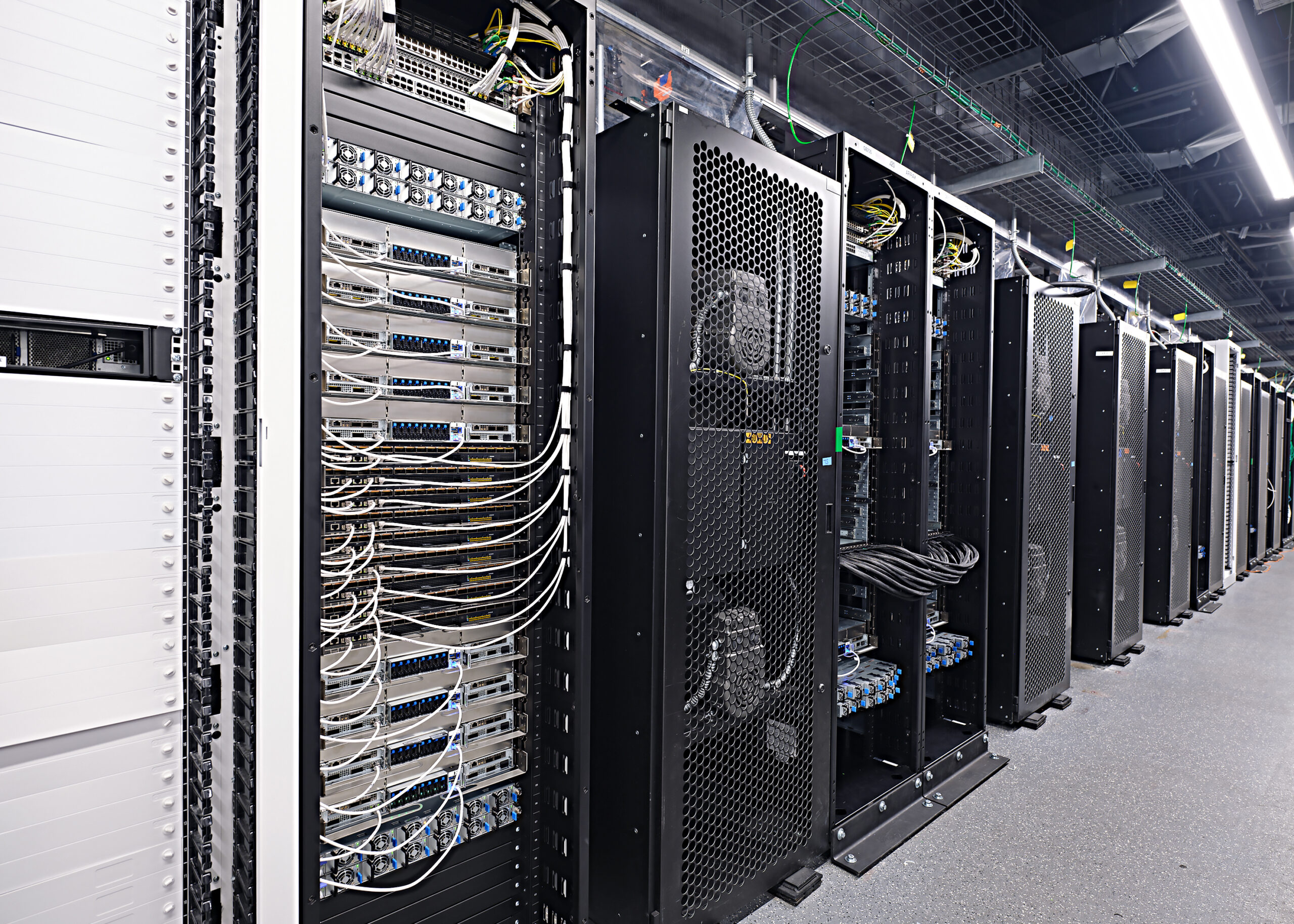
Some of the most important AI workloads in the world are not running primarily on hyperscaler infrastructure. They are running on a smaller and quieter layer of independent GPU cloud operators. Companies that secured NVIDIA allocation, power contracts, and specialized cooling infrastructure years before the broader market fully understood what AI compute demand would become.
That positioning advantage did not happen overnight.
It happened through industrial decisions:
Who locked in power agreements early.
Who committed to expensive liquid cooling systems before demand exploded.
Who built direct relationships with NVIDIA when GPU infrastructure still looked niche instead of strategic.
Now those decisions are becoming one of the most important bottlenecks in artificial intelligence.
Intro
The AI boom is no longer just a software story.
It is an infrastructure story.
Training frontier AI models requires enormous amounts of compute power, electrical capacity, cooling systems, networking hardware, and physical real estate. That infrastructure is becoming increasingly difficult and expensive to build.
NVIDIA GPUs remain one of the central supply constraints in AI infrastructure today. Companies cannot simply order tens of thousands of H100 or H200 GPUs and expect immediate delivery. Access depends on relationships, purchasing history, operational credibility, and increasingly, power availability.
That created an opening.
While Amazon, Microsoft, and Google diversified into internal silicon projects like Trainium and TPUs, a smaller group of independent operators focused almost entirely on NVIDIA infrastructure.
That bet now looks very important.
Why this matters
The next phase of AI may not be determined solely by who builds the best models.
It may depend on who controls the physical infrastructure underneath them.
Power availability is becoming one of the defining constraints of the AI economy. A serious GPU data center can require hundreds of megawatts of electricity, along with advanced cooling systems capable of handling extremely dense compute environments.
That infrastructure takes years to permit and build.
At the same time, AI demand continues accelerating.
This creates a structural tension:
The hyperscalers are racing to expand GPU capacity while independent GPU cloud operators are trying to lock in long-term contracts and infrastructure before the giants fully catch up.
The outcome of that race is still unresolved.
CoreWeave
Current share price: approximately $114.15
Current market cap: approximately $56.8 billion
Data current as of May 8, 2026.
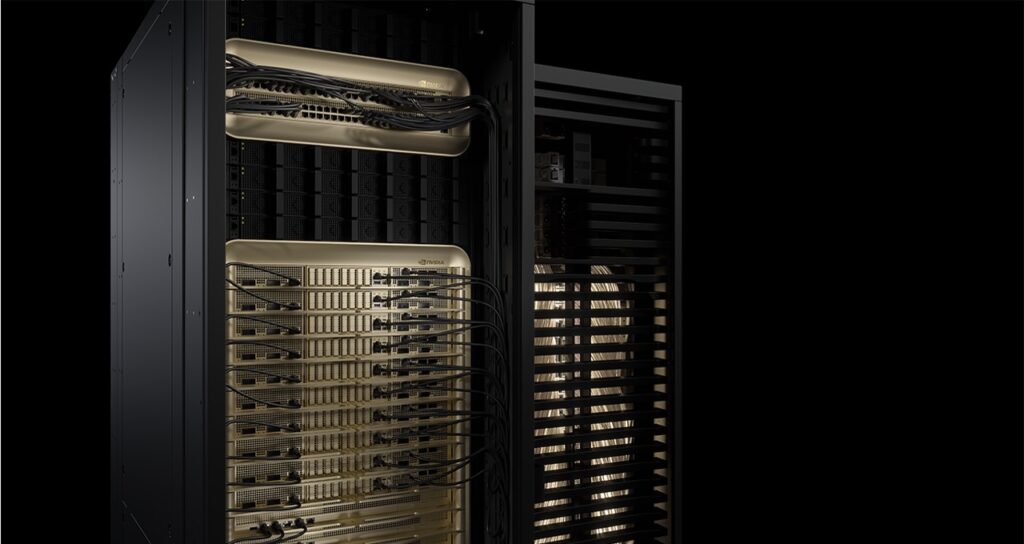
CoreWeave has become one of the most important independent GPU cloud providers in the United States.
The company specializes in large-scale NVIDIA GPU infrastructure for enterprise AI customers and frontier model developers. Its rise happened quickly, but the groundwork was laid years earlier through aggressive investment in GPU inventory and data center infrastructure.
That positioning now gives CoreWeave access to one of the most valuable assets in the AI market:
Large-scale GPU clusters available immediately.
CoreWeave reported Q1 2026 revenue of approximately $2.08 billion, with revenue backlog reaching nearly $99.4 billion. The company also guided for massive infrastructure spending in 2026, projecting between $31 billion and $35 billion in capital expenditures.
Those numbers tell an important story.
Demand for AI compute infrastructure is still exploding.
But so are the costs required to stay competitive.
CoreWeave is increasingly being valued less like a traditional software company and more like a strategic infrastructure provider.
The company’s biggest risks remain customer concentration and infrastructure dependency. A relatively small number of large AI customers account for a meaningful share of revenue, while NVIDIA allocation and power access remain critical operational dependencies.
What to Watch
• NVIDIA allocation trends
• Large customer contract renewals
• Power infrastructure expansion announcements
• Debt and capex growth relative to revenue
(Source: CoreWeave Q1 2026 earnings release, Business Wire)
Lambda
Private Company
Last verified valuation:
Approximately $2.5 billion post-money valuation in February 2025.
Later reports suggested Lambda explored funding rounds at valuations between $4 billion and $5 billion, though those figures should be treated carefully unless fully confirmed.
Lambda occupies a different layer of the GPU cloud market than CoreWeave.
Where CoreWeave targets massive enterprise and frontier AI workloads, Lambda built its reputation among developers, researchers, startups, and smaller AI teams that need easier access to high-performance GPUs.
That developer-first approach matters more than many investors realize.
AI researchers tend to stay loyal to platforms that are simple, fast, and familiar. Lambda’s platform has become well known within parts of the research community because it reduces friction compared to some traditional cloud environments.
Reuters reported that NVIDIA participated in Lambda’s 2025 funding round, which also signals that NVIDIA sees value in maintaining multiple independent distribution layers for GPU infrastructure.
Still, Lambda faces serious competitive pressure.
If hyperscalers aggressively reduce GPU pricing or if larger independent operators expand deeper into the developer market, Lambda’s positioning could become harder to defend over time.
What to watch
• Future funding rounds
• IPO timing discussions
• Expansion into enterprise AI infrastructure
• Pricing pressure from hyperscalers
(Source: Reuters)
Crusoe
Private Company
Valuation:
Above $10 billion following its 2025 Series E funding round.
Crusoe’s strategy is very different from both CoreWeave and Lambda.
Its primary advantage is not just GPU infrastructure.
It is energy infrastructure.
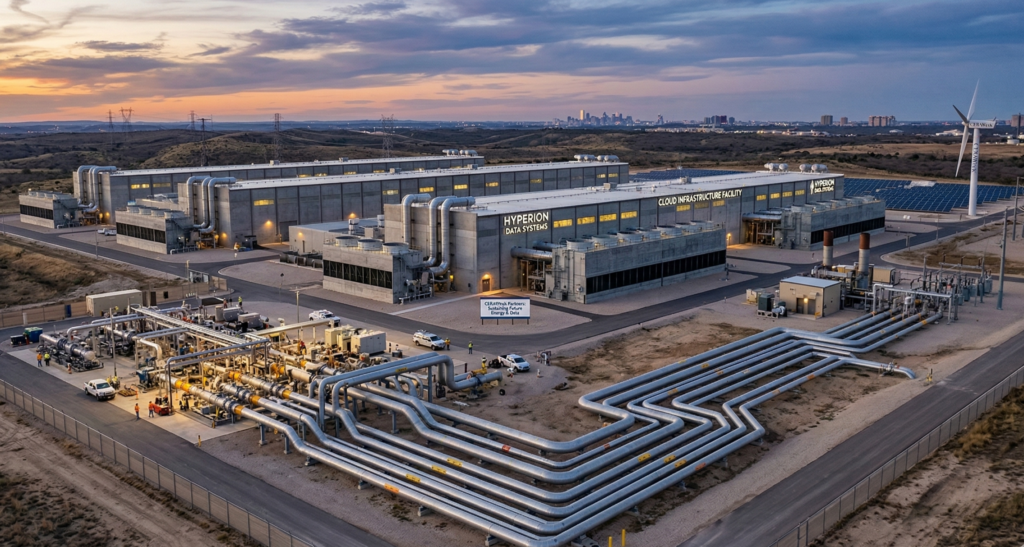
Crusoe originally became known for using stranded natural gas, energy that would otherwise be flared at oil and gas sites, to power modular compute operations. Over time, the company expanded into larger AI data center infrastructure projects tied directly to power development.
That creates a different kind of moat.
Instead of competing only for GPUs, Crusoe is also competing for cheap and scalable electricity.
In 2025, Crusoe announced a massive funding round valuing the company above $10 billion. Reuters also reported the company’s involvement in building major AI infrastructure projects connected to OpenAI and large-scale data center development in Texas.
That signals something important:
The AI infrastructure race is increasingly becoming an energy race.
The companies that can secure long-term power availability may ultimately hold the strongest position.
What to watch
• Energy policy and methane regulations
• Expansion into larger enterprise AI infrastructure
• New data center construction announcements
• Utility and power partnerships
(Source: Reuters)
Comparison: Independent GPU Cloud Operators
| DIMENSION | COREWEAVE (CRWV) | LAMBDA LABS | CRUSOE ENERGY |
| Market status | Public — Nasdaq: CRWV | Private Company | Unicorn (pre-IPO) | Private Company | Unicorn (pre-IPO) |
| Price / Valuation | ~$47.22 (May 7–8, 2026) | ~$4B last known valuation [Unverified — verify before publish] | >$10B last known valuation (Dec 2025) [Unverified — verify before publish] |
| Market cap | >$70B (Q1 2026 earnings) | N/A — private | N/A — private |
| Structural edge | Scale + NVIDIA allocation | Developer experience | Energy cost advantage |
| Primary customer | Frontier AI labs, enterprise | AI research teams, startups | AI workloads seeking low-cost compute |
| Key dependency | NVIDIA supply + power contracts | Developer community retention | Stranded energy availability + regulation |
| What breaks this | Customer concentration; NVIDIA pivots | Hyperscaler price war | Regulatory shift on methane flaring |
Market outlook
The hyperscalers are not standing still.
Microsoft continues expanding Azure AI infrastructure.
Google continues investing heavily in TPUs.
Amazon is pushing deeper into Trainium and custom AI silicon.
All of those moves are responses to the same reality:
AI infrastructure has become strategically important at the national and corporate level.
But independent GPU cloud operators still hold meaningful advantages today.
Many secured GPU allocation earlier.
Many locked in power contracts earlier.
Many specialized entirely around NVIDIA infrastructure while hyperscalers diversified.
The next several years will determine whether those advantages are temporary or durable.
There is also another possibility the market is quietly considering:
Acquisition.
If independent GPU operators continue proving strategically valuable, some may eventually become acquisition targets for larger cloud, infrastructure, or energy companies.
That possibility becomes more realistic as AI infrastructure moves closer to being treated like critical industrial infrastructure instead of traditional tech.
The honest tension
The hyperscalers are not standing still. Microsoft’s Azure GPU buildout, Google’s continued TPU investment, and Amazon’s Trainium chip program are direct responses to the same infrastructure bottleneck that created the independent cloud layer in the first place. Each of these programs represents a bet that hyperscalers can reduce their NVIDIA dependency.
In closing
Most people still think of AI as software.
But software is only the visible layer.
Underneath it sits a rapidly expanding industrial system built from power plants, GPU clusters, cooling systems, fiber networks, transformers, and specialized data centers.
That layer is becoming one of the most important competitive battlegrounds in technology.
The companies controlling GPU infrastructure today are not just renting compute.
They are helping define who gets access to the next generation of AI capability, and at what scale.
The market is still trying to decide whether independent GPU clouds are temporary beneficiaries of an infrastructure shortage, or the early foundations of a permanent new layer in the global technology stack.
That answer is still unfolding.
Rabbt covers the Frontier Economy, the infrastructure, companies, and industrial shifts shaping what comes next. AI infrastructure, quantum computing, space systems, eVTOL, advanced materials, and the supply chains underneath them all.
Sources
CoreWeave Q1 2026 Earnings Release
https://www.businesswire.com/news/home/20260507558197/en/CoreWeave-Reports-Strong-First-Quarter-2026-Results
Reuters – Lambda Funding Round
https://www.reuters.com/technology/artificial-intelligence/ai-cloud-startup-lambda-raises-480-million-new-round-nvidia-among-investors-2025-02-19/
Reuters – Crusoe Funding Round
https://www.reuters.com/technology/ai-data-centre-startup-crusoe-raising-138-billion-latest-funding-round-2025-10-23/
| RABBT INTELLIGENCE NOTE A structured Research File on CoreWeave would map the NVIDIA allocation dependency against IPO disclosure data, and flag customer concentration as the condition most likely to shift this picture. The Relationship Graph would show the CoreWeave-to-frontier-lab dependency chain that most coverage reduces to a single line item. The same file on Crusoe Energy would track the energy supplier network and the regulatory signals that determine whether the stranded gas model remains viable at scale. The open question: whether independent GPU clouds survive the hyperscaler buildout as independent entities, or become acquisition targets once the infrastructure layer is proven. That is the kind of evolving claim that requires continuous monitoring, not a point-in-time verdict. |
Rabbt covers the Frontier Economy – the infrastructure, companies, and industrial shifts that define what comes next. AI infrastructure, quantum computing, space, eVTOL, advanced materials, and the supply chains underneath them all.
0 Comments