
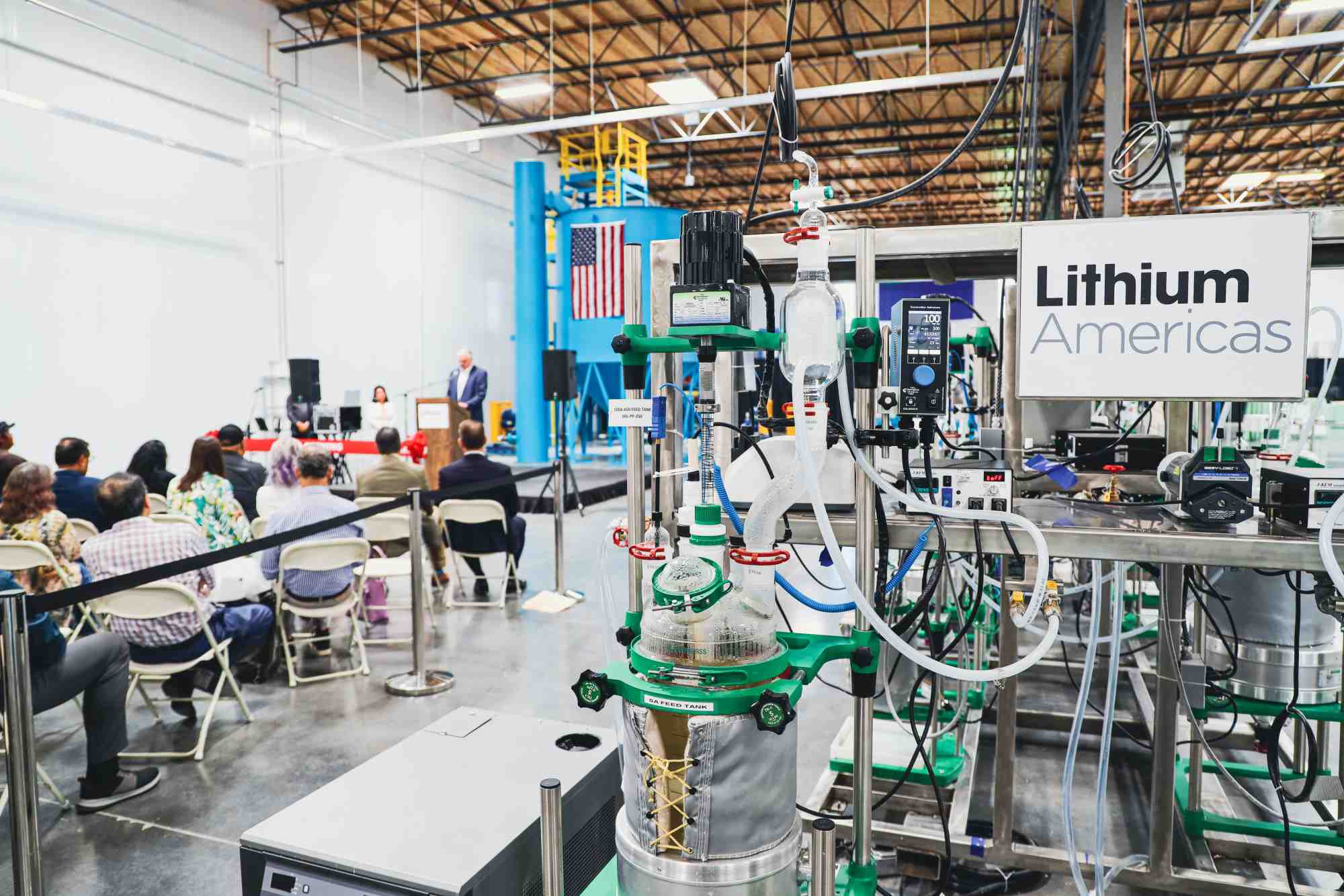
The U.S. does not have a critical minerals problem. It has a processing problem. The ore is in the ground. The lithium deposits are confirmed. The rare earth mines are operational. What the country is missing is the industrial infrastructure to turn raw material into usable product without routing it through China first. That gap is now a national security calculation, and the federal government has started writing very large checks to close it. Three companies are at the center of that build-out. None of them are finished. All of them are in a race where the finish line keeps moving.
The structural vulnerability is not new, but 2025 accelerated the policy response. China controls the processing and refining of approximately 60 to 80 percent of battery-critical materials globally, including rare earth elements, refined lithium, and cobalt. When Beijing began using export controls on rare earth materials as a trade lever in early 2025, it converted an economic dependency into an active geopolitical instrument.
The U.S. response has been substantial. Project Vault, a $12 billion critical mineral reserve initiative launched in February 2026, created a civilian-oriented strategic buffer. The Department of Defense took an equity stake in a rare earth company for the first time in history. The DOE deployed $2.23 billion in loan guarantees toward a single lithium project in Nevada. The 2026 Critical Minerals Ministerial produced bilateral frameworks with Australia, Malaysia, and partner nations to diversify supply outside Chinese influence.
The policy architecture is in place. The industrial infrastructure is not. Every major domestic processing project is still under construction, and every one of them carries execution risk. That is the tension this post maps.
MP Materials (NYSE: MP) | Share Price: $66.63 | Market Cap: ~$11.84B (May 1, 2026)
Structural position
MP Materials owns and operates the only commercial-scale rare earth mine in the United States: Mountain Pass in California. More importantly, it is the only company in the Western Hemisphere with integrated capabilities spanning mining, rare earth separation, oxide production, metallization, and magnet manufacturing. That last step, finished magnets, is where the strategic value concentrates. Rare earth magnets are in every EV traction motor, every drone, every F-35, every industrial robot. MP controls the only domestic path from ore to finished magnet.
Key dependencies
The DoD is now MP’s anchor customer and largest shareholder, holding a 15 percent stake via $400 million in convertible preferred equity acquired in July 2025. That relationship de-risks revenue substantially through a 10-year price floor of $110 per kilogram for NdPr oxide and a 10-year offtake agreement covering 100 percent of the planned 10X facility’s magnet output. The dependency cuts both ways: if DoD appropriations shift or the partnership structure changes, MP’s revenue model changes with it. The other structural dependency is the Shenghe Resources relationship, which MP has committed to wind down, and the speed of that transition matters.
Recent signal
In February 2026, MP broke ground on its 10X rare earth magnet manufacturing campus in Northlake, Texas, a 120-acre site fewer than 10 miles from its existing Independence facility in Fort Worth. The 10X facility will add 7,000 metric tons of annual NdFeB magnet capacity when commissioned in 2028, bringing total U.S. magnet output to 10,000 metric tons per year. That number roughly matches total U.S. rare earth magnet imports in 2025. Construction is backed by $1 billion in financing from JPMorgan and Goldman Sachs alongside the DoD equity package.
What to watch
Two specific milestones matter structurally. First, whether the existing Independence facility in Texas reaches its 1,000 metric ton production target in 2026 on schedule. That is the proof-of-concept for the 10X scale. Second, whether MP successfully completes the transition away from its Shenghe Resources offtake agreement without disrupting oxide revenue during the ramp period. Execution on both of those changes the picture materially.
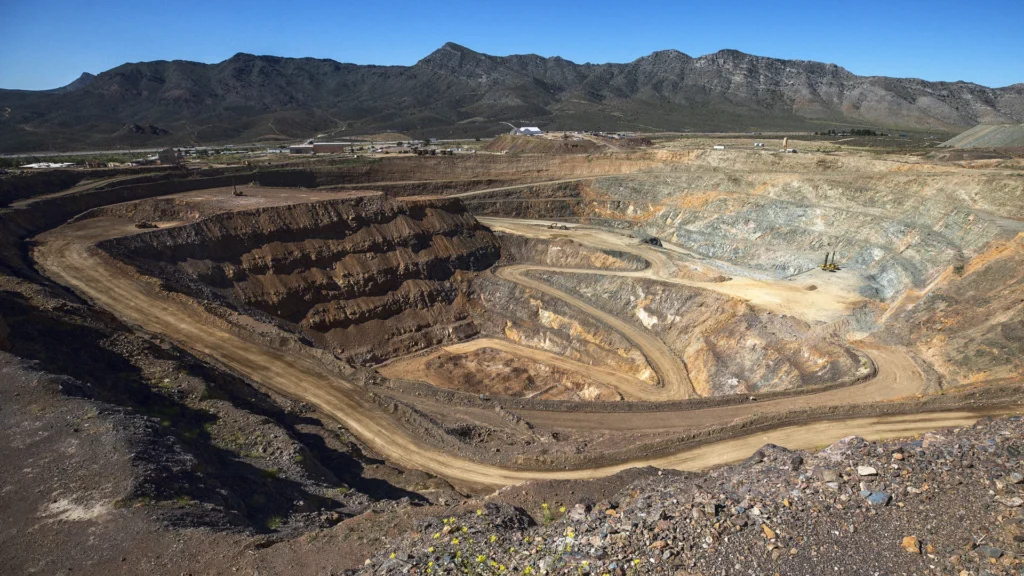
Lithium Americas (NYSE/TSX: LAC) | Share Price: $5.71 | Market Cap: ~$1.98B (May 1, 2026)
Structural position
Lithium Americas controls Thacker Pass in Humboldt County, Nevada: the largest known measured lithium resource in North America. The project is structured as a joint venture with General Motors holding a 38 percent interest. Phase 1 is designed to produce 40,000 tonnes per year of battery-grade lithium carbonate, enough to support batteries for approximately 800,000 electric vehicles annually. No other domestic lithium project at this scale is as far along in construction.
Key dependencies
The $2.23 billion DOE loan is the spine of this project. Two drawdowns totaling $867 million have been received as of February 2026. The remaining tranches are tied to construction milestones, which means any delay in the physical build creates a compounding financing gap. The GM relationship is structural: GM holds an offtake commitment and strategic equity stake. If GM’s EV production targets shift significantly, the demand anchor for this supply weakens. The 2026 capex guidance of $1.3 to $1.6 billion exceeds the current $906 million cash position, which means the DOE drawdown cadence is not optional.
Recent signal
Engineering is 93 percent complete as of year-end 2025. Peak construction employment of approximately 1,800 workers is expected on site by late 2026. The project received its second DOE loan drawdown of $432 million in February 2026, following the first $435 million drawdown in October 2025. Mechanical completion is targeted for late 2027, with full production ramp through 2028. The DOE also received equity warrants for a 5 percent stake in both the company and the joint venture as part of the loan amendment structure, making the federal government a direct financial participant in the project’s outcome.
What to watch
The critical event is whether the 2027 mechanical completion timeline holds under peak construction pressure. A slip in that date creates a cascade: delayed production, delayed revenue, potential pressure on DOE drawdown conditions, and renegotiation of GM’s offtake terms. The other factor is lithium price trajectory. The project was financed against long-term demand assumptions. A sustained low-price environment compresses the economics before a single tonne is produced.

Energy Fuels (NYSE American: UUUU) | Share Price: $21.64 | Market Cap: ~$5.41B (May 1, 2026)
Structural position
Energy Fuels operates the White Mesa Mill in Utah, the only licensed conventional uranium mill in the United States. That asset has been repurposed into something more strategically interesting: a multi-mineral processing facility now handling rare earth element monazite and producing separated NdPr oxide and, more recently, heavy rare earth oxides including dysprosium. Dysprosium is a heavy rare earth element critical for high-performance permanent magnets. It is almost entirely sourced from China. Energy Fuels is one of the only Western companies with demonstrated separation capability at the mill level.
Key dependencies
The monazite feedstock supply chain is the key variable. White Mesa’s REE production depends on monazite concentrate supply from heavy mineral sands projects, including Energy Fuels’ own projects in Madagascar, Brazil, and Australia, as well as third-party supply agreements. If monazite supply is inconsistent, the mill runs below capacity. The Phase 2 REE expansion, which filed a Bankable Feasibility Study in January 2026, requires additional financing to build out full separation capacity for both light and heavy rare earths. The Phase 2 financing decision is a near-term structural event.
Recent signal
In December 2025, Energy Fuels produced high-purity dysprosium oxide at White Mesa that passed initial purity and qualification benchmarks set by a major South Korean automotive manufacturer for downstream permanent magnet production. That is a commercially meaningful milestone. It means the company has demonstrated the technical capability to produce heavy rare earth oxides to spec for a real customer. In April 2026, the company appointed a new CEO, Ross Bhappu, signaling a management transition as the company moves from development-stage REE work into commercial-scale operations.
What to watch
Two events would materially change the picture. First, whether the South Korean automotive OEM qualification converts into a binding offtake agreement. A signed contract transforms the Dy production story from a technical proof point into a revenue commitment. Second, whether the Phase 2 BFS results in a financing close. Without Phase 2, White Mesa’s REE capacity remains constrained and the strategic potential of the asset is partially unrealized.
COMPANY COMPARISON
| MP Materials (MP) | Lithium Americas (LAC) | Energy Fuels (UUUU) | |
| Ticker | NYSE: MP | NYSE/TSX: LAC | NYSE American: UUUU |
| Market Cap | ~$11.84B (NYSE: MP, $66.63) | ~$1.98B (NYSE: LAC, $5.71) | ~$5.41B (NYSE American: UUUU, $21.64) |
| What They Control | Only operating rare earth mine + processing + magnet mfg in the U.S. | Largest known lithium resource in North America (Thacker Pass, NV) | Only licensed conventional uranium mill in the U.S., now processing REE monazite |
| Key Dependency | DoD as anchor customer; 10X facility must commission on time (2028) | DOE loan drawdown milestones; GM offtake commitment | Monazite supply agreements; Phase 2 expansion financing |
| Recent Signal | Broke ground on Northlake, TX 10X campus (Feb 2026); DoD is now largest shareholder | Second DOE drawdown ($432M) received Feb 2026; 1,800 workers expected on site by late 2026 | Heavy rare earth oxide (Dy) qualified by South Korean auto OEM (Dec 2025); new CEO appointed Apr 2026 |
| What to Watch | Texas Independence facility ramp (2026); 10X groundbreak milestones | Remaining DOE drawdown cadence; whether 2027 mechanical completion holds | Phase 2 BFS financing decision; whether Dy qualifications convert to offtake contracts |
What could break this thesis
The domestic supply chain build-out case rests on three assumptions that deserve scrutiny. First, that federal policy support is durable. The DoD equity stake in MP, the DOE loan to Lithium Americas, and the Project Vault reserve structure are all administrative constructs. Policy reversals, budget shifts, or political changes in how critical minerals are prioritized would alter the financing landscape for every project on this list. Second, that Chinese pricing behavior does not make domestic production economically irrational before these facilities come online. Lithium prices have already fallen sharply from 2022 peaks, and rare earth prices inside China remain well below the DoD’s $110/kg floor commitment. If that floor disappears, the economics of domestic processing weaken significantly. Third, that construction timelines hold. Every facility covered here is in active construction with multi-year completion horizons. Capital-intensive projects at this scale routinely run late and over budget. The strategic logic is sound. The execution is not yet proven.
RABBT INTELLIGENCE NOTE
A structured Research File on Lithium Americas would map the DOE drawdown milestone structure against GM’s offtake commitment terms, and flag the 2027 mechanical completion date as the condition most likely to shift this picture. Any slip in that timeline creates a financing cascade that the current cash position cannot absorb without additional equity dilution. The Relationship Graph would show the structural triangle between Lithium Americas, General Motors, and the DOE that most coverage treats as a single story but is actually three separate dependency chains with different termination conditions. The open question: if lithium prices remain compressed through 2027, does GM’s strategic interest in domestic lithium supply outweigh the economics of sourcing cheaper material elsewhere, and what does the offtake agreement actually say about price floors?
0 Comments