
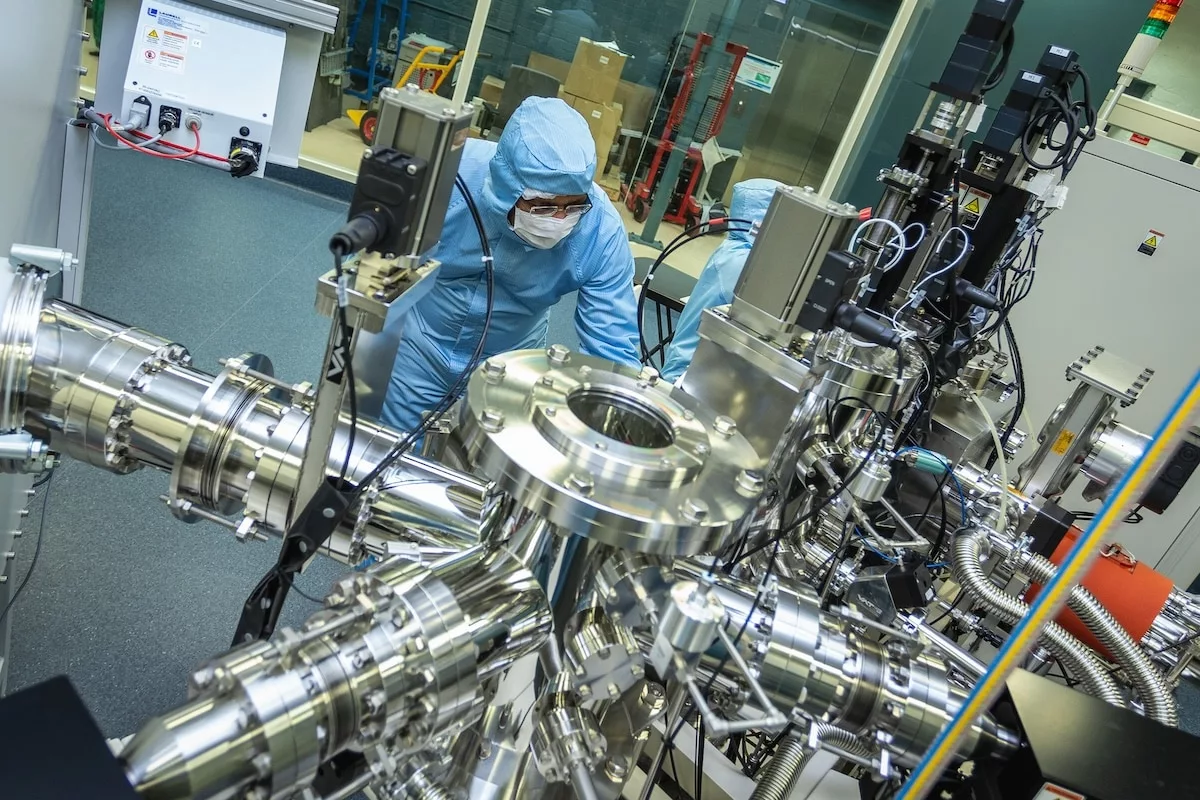
Quantum batteries are getting the headlines. Here’s where the real fight is happening.
By Rabbt | May 13, 2026
A phone that charges in seconds. An electric vehicle that adds three hundred miles of range in the time it takes to grab coffee. A drone that recharges mid-flight without landing.
That sounds like science fiction. But researchers are now publishing early evidence that something called a quantum battery may actually work, at least in controlled laboratory conditions. A recent proof-of-concept from a collaboration between CSIRO, RMIT University, and the University of Melbourne demonstrated that collective quantum effects and laser-based charging could enable extremely rapid energy storage and discharge. It made headlines globally.
There is one problem.
Quantum batteries are still operating in nanoseconds, storing tiny amounts of energy, and living entirely inside research facilities. The scientists themselves describe their work as a proof-of-concept, not a product.
That matters, because while the headlines chased the word quantum, an entirely separate and much more urgent battle was already underway. One involving billions of dollars, global manufacturing infrastructure, and companies that will help determine how the world stores and moves energy for the next thirty years. That is the race most people are not watching.
| Want more Frontier Economy intelligence? Follow the research as it develops. Subscribe to Rabbt on Substack at rabbt.substack.com. |
Why Battery Storage Is the Central Bottleneck Right Now
The battery industry is entering one of the largest technology transitions since the invention of the lithium-ion cell in the late 1970s. AI data centers are exploding in energy demand. Electric aviation is trying to get off the ground, literally. Military systems, autonomous drones, grid-scale energy storage, and the entire EV supply chain are all converging at the same inflection point.
Every single one of those industries is bottlenecked by the same fundamental problem: how do you store more energy, faster, more safely, and at a cost that actually scales? Not just capacity. Speed. Safety. Heat tolerance. Longevity. Weight. Cost per kilowatt-hour. Resilience in extreme conditions. Supply chain independence from lithium and cobalt markets.
Quantum batteries are one possible long-term answer. However, the much more immediate commercial war is happening inside next-generation battery chemistry, and it is already well underway.
Where Quantum Batteries Actually Are Today
To be fair to the science: quantum battery research is genuinely interesting. The core idea is that quantum states, entanglement, or collective charging effects could theoretically allow energy systems to charge exponentially faster than traditional batteries under the right conditions.
But there are no publicly traded quantum battery companies. No manufacturing programs. No automotive validation agreements. The strongest activity is happening inside universities and government research labs. The gap between “scientists demonstrated a quantum effect” and “mass-manufactured EV battery cells” is enormous. It involves materials science, thermal management, safety testing, industrial chemistry, and production economics that do not yet exist for quantum systems. That gap is where most technology bets either make fortunes or evaporate.
The Companies Already Running
QuantumScape (Ticker: QS)
Ticker: QS Price: ~$8.22 Market Cap: ~$5.1B 52-Week Range: $3.80 to $19.07 Q1 2026 Customer Billings: $11M
QuantumScape is developing solid-state lithium-metal batteries, a design that replaces the liquid electrolyte in conventional lithium-ion cells with a solid material. In theory this enables faster charging, higher energy density, better safety, and longer cycle life. Volkswagen has been QuantumScape’s most prominent automotive partner. The company recently announced the launch of its Eagle Line pilot production system, an important signal that it is moving from pure science into manufacturing validation. QuantumScape has also expanded its target markets to include AI data center power infrastructure and defense applications.
What to Watch: Whether Eagle Line generates material commercial contracts beyond the Volkswagen relationship. Expansion into AI and defense markets is a signal worth tracking. The key structural question is whether QuantumScape can industrialize production at scale before better-capitalized competitors close the gap.
Solid Power (Ticker: SLDP)
Ticker: SLDP Backers: BMW, Ford Stage: Pilot production, licensing model
Solid Power is the other major American player in the solid-state race, with backing from both BMW and Ford. Its strategic approach differs meaningfully from QuantumScape: rather than pursuing fully integrated manufacturing, Solid Power has leaned into licensing and partnerships, a model that could let it move faster toward commercial adoption. Its sulfide-based solid electrolyte design is particularly interesting because it is theoretically compatible with existing battery production infrastructure. In an industry that has spent trillions building lithium-ion manufacturing capacity, that compatibility may be the deciding factor in whether any solid-state company survives the commercialization phase.
What to Watch: Whether Solid Power’s licensing model generates milestone payments from BMW or Ford. Compatibility with existing manufacturing lines is the structural advantage to track.
CATL (Private)
Status: Private (dominant Chinese market position) Recent Signal: 60 GWh sodium-ion supply agreement
Western coverage of the battery industry tends to focus heavily on American and European startups. That is a mistake if you are trying to understand where the market is actually moving. CATL, China’s dominant battery manufacturer, is already operating at a scale that dwarfs every Western competitor. The company is pushing aggressively into sodium-ion batteries, with a recently reported 60 GWh supply agreement that represents industrial deployment, not laboratory-scale experimentation.
Sodium-ion batteries offer lower raw material costs, reduced dependence on lithium supply chains, and improved performance in extreme temperatures. The tradeoff is generally lower energy density than premium lithium cells. For grid storage, data center backup, and infrastructure applications, that tradeoff may be perfectly acceptable.
What to Watch: Whether CATL’s sodium-ion deployments generate a competitive response from Western manufacturers. The scale of AI-driven energy demand globally makes CATL’s moves worth tracking closely.
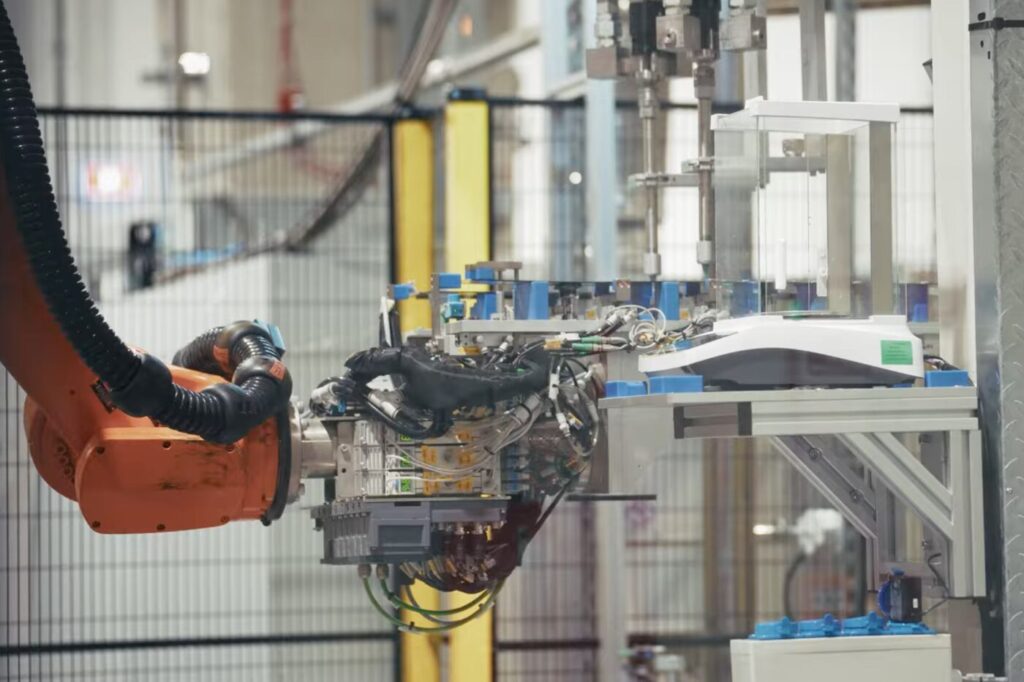
Factorial Energy (Private)
Status: Private Partners: Stellantis, Mercedes-Benz
Factorial Energy has quietly become one of the more serious battery startups in the automotive sector. Its FEST solid-state cells have reportedly demonstrated 375 Wh/kg energy density with a charge time from 15% to 90% in approximately 18 minutes across extreme temperature ranges. The existence of active automotive validation programs with Stellantis and Mercedes-Benz is meaningful. Major automakers are not casually committing engineering resources to battery experiments anymore. That level of partnership requires demonstrated performance.
What to Watch: Whether either automotive partner announces a production commitment. That would be the structural signal that Factorial’s technology is past validation and into commercialization.
Toyota (Private Battery Division)
Status: Public parent (TM), private battery R&D Approach: Long-term all-solid-state development, decades of patent position
Toyota has been working on solid-state battery technology longer than most of the startups generating today’s headlines, just more quietly. Multiple industry analyses continue to place Toyota among the leaders in all-solid-state battery development, with a portfolio of patents and manufacturing research that took decades to build. What Toyota brings to this race that startups cannot easily replicate is strategic patience. It does not need to make public promises to sustain investor enthusiasm. It can optimize for long-term manufacturability rather than next-quarter milestones. In a market where the finish line is genuine industrial scale, that may matter more than any single lab result.
What to Watch: Any Toyota announcement of a production timeline or commercial vehicle program using solid-state cells. After years of quiet development, a production commitment would represent a major signal.
Comparison: Battery Technology Stack Positions
| Company | Role in Stack | Structural Position | Key Dependency | What to Watch |
|---|---|---|---|---|
| QuantumScape (QS) | Solid-state cell development, manufacturing validation | Eagle Line pilot production underway; expanding beyond EVs into AI data centers and defense | Dependent on Volkswagen/PowerCo relationship and Eagle Line scaling successfully | Commercial contracts beyond Volkswagen; Eagle Line production ramp rate |
| Solid Power (SLDP) | Solid electrolyte licensing, OEM partnerships | Licensing model creates capital-efficient path to commercial adoption; sulfide electrolyte compatible with existing lines | Dependent on BMW and Ford achieving validation milestones that trigger milestone payments | BMW or Ford production program announcement; sulfide electrolyte compatibility validation |
| CATL (Private) | Dominant battery manufacturing, sodium-ion deployment | Operating at industrial scale; 60 GWh sodium-ion supply agreement positions it at the grid and infrastructure layer | Not directly accessible to most public investors; geopolitical risk to Western supply chain relationships | Scale of sodium-ion commercial deployments; whether Western companies respond with competing chemistry |
| Factorial Energy (Private) | High-performance solid-state cells for automotive | Active validation programs with Stellantis and Mercedes-Benz; FEST cells show competitive performance data | Dependent on automotive OEM production commitments to move from validation to revenue | Production program commitment from Stellantis or Mercedes-Benz |
| Toyota (TM) | Long-term solid-state manufacturing at automotive scale | Deepest patent portfolio and longest development timeline of any company on this list; optimizes for manufacturability | Dependent on internal timeline decisions; not under pressure to announce prematurely | Any Toyota production timeline announcement for solid-state vehicle program |
Three Races, One Market
Stepping back, there are really three distinct battery competitions happening simultaneously. Quantum batteries are at research stage: potentially interesting in the long term, but not commercially relevant this decade for almost any application. Solid-state batteries represent probably the most important near-term transition in battery technology, with real industrial activity already underway and significant commercialization risk remaining. Alternative chemistry batteries, including sodium-ion, lithium-sulfur, silicon-anode, and hybrid chemistries, may actually scale faster than many people expect.
The real winner across all three races may not be determined by which chemistry is technically superior. It may be determined by which chemistry scales cheapest at industrial volume, integrates most easily into existing production infrastructure, survives supply chain stress and raw material volatility, and clears regulatory requirements fastest in key markets. The battery market is not just a science problem. It is a manufacturing war.
The Honest Tension
Battery history is a graveyard of extraordinary lab data that never became commercially viable products. Every company on this list has demonstrated impressive technical results. None of them has yet delivered batteries at the cost, scale, and consistency that automotive and energy storage customers actually require at commercial volumes.
The commercialization gap is the core risk. QuantumScape has been developing its technology for more than a decade with substantial resources. Solid Power has active OEM partners. Factorial has impressive performance data. None of that guarantees they clear the manufacturing cost curve. Toyota’s strategic patience is a genuine advantage, but it also means the market does not know when Toyota’s solid-state program will produce vehicles at scale.
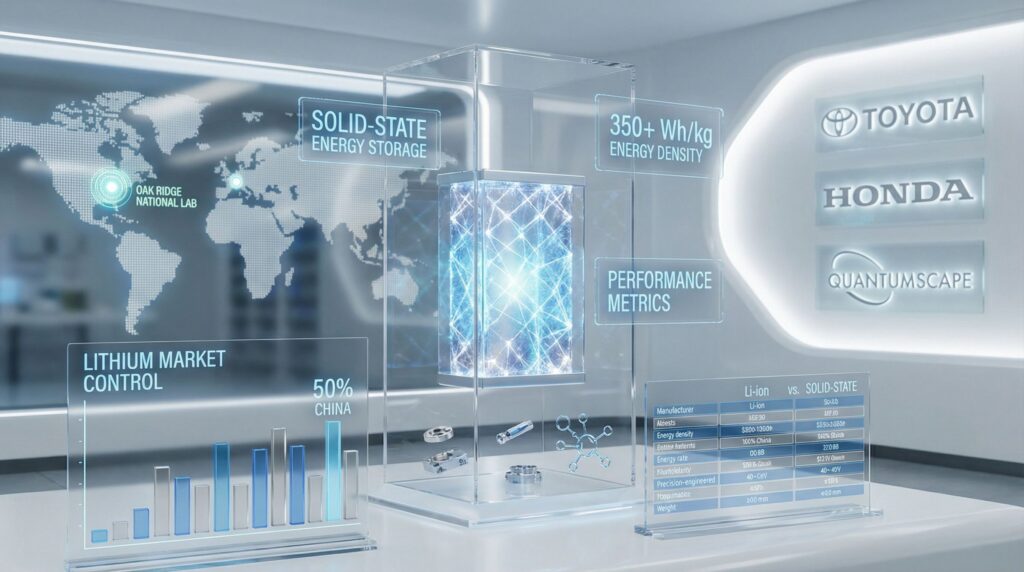
There is also a chemistry competition risk that cuts across all of them. If CATL’s sodium-ion deployment proves good enough for the majority of grid and data center applications, the total addressable market for premium solid-state chemistry may be smaller than the current investor narrative assumes.
Quantum batteries make for extraordinary headlines because they hint at something that feels almost magical: near-instant energy transfer at a scale that could transform daily life. That framing is not wrong. The physics is real. The long-term potential is genuine.
But today, the companies closest to reshaping how the world stores energy are not building quantum systems. They are solving brutal, unglamorous engineering problems inside factories, supply chains, and industrial chemistry programs. The trillion-dollar infrastructure battle for the next energy era is already happening. It is just happening quietly, while everyone else is staring at the word quantum.
| Rabbt Intelligence Note: A structured Research File on QuantumScape would map its Eagle Line production ramp against the evidence of actual customer billings, and flag a signed commercial contract outside the Volkswagen ecosystem as the change trigger most likely to shift this picture from technology demonstration to commercial business. The Relationship Graph would show that Solid Power and QuantumScape are competing for the same automotive OEM relationships while also potentially licensing to the same manufacturing infrastructure, creating a structural dynamic where one company’s success in a given partnership directly reduces the other’s runway. The open question: does the expansion of QuantumScape’s target market into AI data centers and defense represent a genuine commercial pivot, or a narrative shift driven by valuation pressure? |
0 Comments