
The Money Behind the Robots Is Now the Story
Three robotics companies raised capital through three different structures this year, and the structure carries a risk of its own, separate from whether the robot works.
Most coverage of a robotics funding round asks whether the company deserves its valuation. The more useful question is who actually holds the risk if it does not.
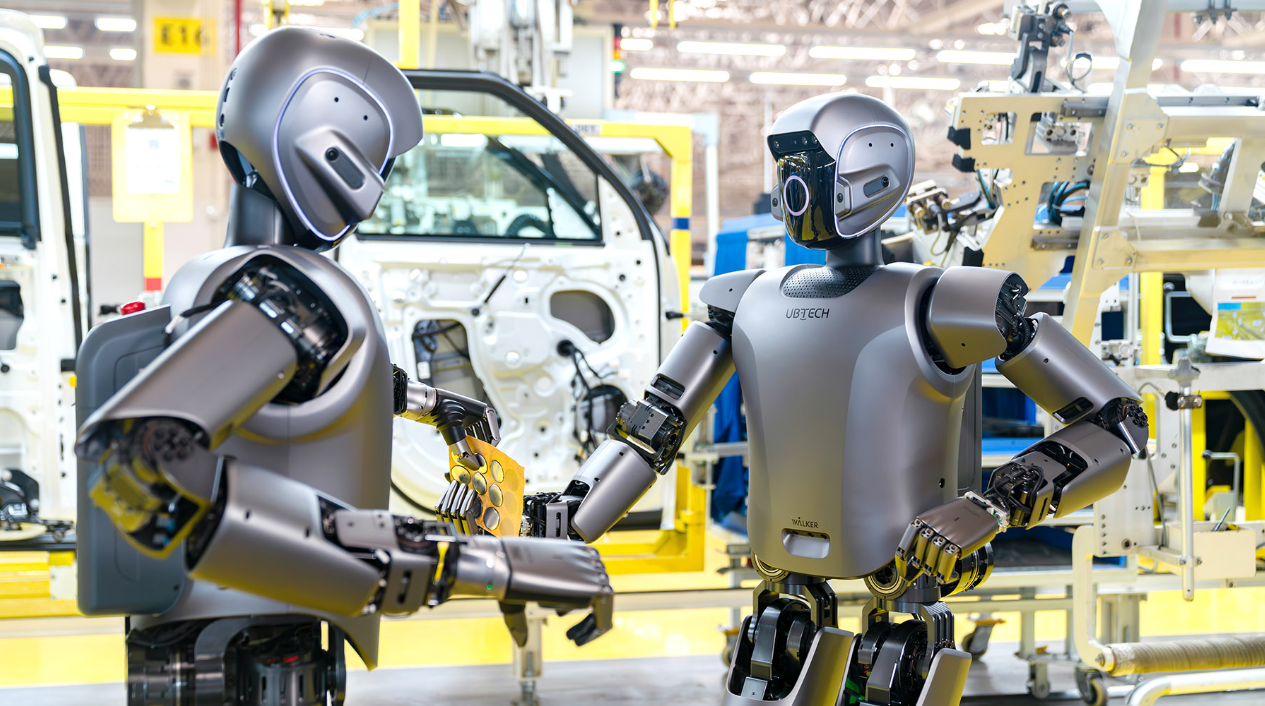
Two humanoid robots working alongside each other on an automotive assembly line
On June 9, 2026, Standard Bots announced a $200 million Series C funding round that valued the company at $1 billion [1]. Most coverage graded the robot, the way robotics funding news almost always does, but the real news is who led the round. RoboStrategy are a fund whose own shares trade on the Nasdaq under the ticker BOT, which makes the lead investor in this private round a public company [1][2]. The fund wrote the biggest cheque in Standard Bots’ history, and almost nobody asked what that means for the people who own BOT. Where the money comes from matters more than what it buys.
Why Capital Structure Is Suddenly the Story
For most of the past decade, a robotics company had two ways to raise money. Venture capital firms wrote cheques for a slice of a private company that stayed private for years, or a company sold shares directly to the public through a traditional stock offering, at a price the market reset every day. That two-lane system is splitting into more lanes than investors are used to tracking.
Standard Bots just took their largest round from a closed-end fund, a type of investment company that raises money from public shareholders and then invests it into other companies [2]. These firms work something like a mutual fund, except their own shares trade on an exchange all day, like a stock, instead of being priced once [2]. Locus Robotics took a different path entirely, building their whole business on a subscription rather than one-time equipment sales. Agility Robotics, who make the humanoid robot Digit, are skipping the traditional route to the public market by merging with a special purpose acquisition company, or SPAC: a shell company that raises cash from public investors first and later merges with a private business to take it public [3].
Each path puts a different kind of investor between the robot and the risk of it not working. The robot is the same in all three. The investor is not.
Every Monday at 6 AM Eastern. Subscribe at rabbt.org/frontier-file
Standard Bots
Private. $200 million Series C closed June 9, 2026, at a $1 billion post-money valuation [1]. Headquartered in Glen Cove, New York. Customers include Amazon, Lockheed Martin, NASA, Sunoco, and the U.S. Army [1].
Standard Bots make industrial robot arms that a factory worker can teach by demonstration rather than by writing code, a design choice the company says removes the biggest obstacle to putting a robot on a small manufacturer’s floor: nobody on staff who knows how to program one [1]. They design most of their own components rather than assembling a robot from parts other firms build, and they are expanding their Glen Cove facility to 70,000 square feet to bring more of the supply chain in-house [1]. They’ve also become an active voice in Washington, advising the White House and Congress on a national robotics strategy that includes restrictions on Chinese-made industrial robots and components, a regulatory dependency worth naming since Standard Bots would benefit directly if that policy became law [1].
None of that is what makes this round unusual. The cheque came from a public company, and its shareholders are the ones carrying the bet.
RoboStrategy are not a typical venture fund. They are a registered closed-end fund trading on the Nasdaq, and their shares are priced well above what the underlying portfolio is worth on paper. As of June 30, 2026, the fund reported a net asset value of $10.51 per share [2]. That figure is not machinery or hard assets. It is the fund’s own estimate of what its private stakes are worth, divided across shares outstanding, and that estimate already reflects what those companies are expected to become. Against a closing price of $28.19 on August 6, 2026, the prospectus puts the premium at 168.2 percent [2]. Total assets stood at roughly $250 million across a concentrated portfolio of fourteen robotics and AI holdings [2], including stakes in Standard Bots Company, Figure AI, Inc., and Dyna, Inc. Market capitalisation, the value of all shares combined, was approximately $639 million as of August 5, 2026 [4].
That gap between price and net asset value shows what BOT’s own shareholders are actually betting on. They aren’t buying a basket of private companies at today’s disclosed value. They’re paying nearly three times that value on the expectation that those stakes keep getting revalued higher. Private valuations move in both directions.
The gap also has a use. Under a purchase agreement with Roth Principal Investments, the fund may sell up to $2 billion of common stock over 36 months at a small discount to market, but not below net asset value [2]. A fund whose shares trade far above its own stated value can issue new shares into that gap and put the proceeds to work in private rounds. A separate resale registration covers up to 3,839,233 shares already issued privately, letting those holders sell publicly; the fund receives no proceeds from those sales and the shares enlarge the pool available to trade [2].
Key dependency: the fund’s next disclosed valuation of their Standard Bots stake, and whether the share price can hold its premium if that mark does not move as much as the current price implies.
What to watch: the August 12 disclosure already moved. Net asset value rose to $11.32 per share as of July 31, 2026, up 7.71 percent, with the Standard Bots position marked at $86,999,970, or 31.7 percent of net assets [5]. Watch whether the next monthly mark keeps rising, and whether the share price premium narrows toward it as more registered shares reach the market.

Standard Bots robotic arms mounted on mobile workstations in a manufacturing facility
Locus Robotics
Private. Last disclosed valuation close to $2 billion, set at a Series F of more than $117 million in November 2022 led by Goldman Sachs Asset Management and G2 Venture Partners [6]. Total funding reported at roughly $430 million at that round [7]. Headquartered in Wilmington, Massachusetts.
Locus don’t sell their robots. They rent them. The company runs warehouse robots on a subscription they call Robotics-as-a-Service, under which a customer pays a monthly fee per robot covering hardware, software, and maintenance instead of buying the equipment outright. Locus do not publish pricing; third-party analysis puts the figure at roughly $2,000 per robot a month [8]. That is a different financial model than selling a robot once and collecting the revenue at delivery, which is how Standard Bots and most of the industry operate. A subscription spreads Locus’s own cash burn across the life of a contract instead of loading it all at the moment a robot ships.
On May 19, 2026, Locus acquired Nexera Robotics, a Vancouver company working on robotic grasping: the problem of getting a machine to physically pick up an object it has not handled before [9]. Moving things around a warehouse is largely solved. Picking them up is not, because a soft plastic bag, a rigid carton, and an odd-shaped box each need a different grip, which is why a person still stands at the shelf on most sites. The acquisition brings in patented gripper technology built to adapt to variations in shape, surface, material, porosity, and weight, and Locus expect to integrate it into their Locus Array platform over the coming months [9]. Each item type a robot can handle without help is one more reason a customer no longer needs that person there.
Key dependency: whether growth has kept pace with a valuation set almost four years ago, before either the SPAC or public-fund financing paths now open to their rivals existed.
What to watch: any new priced round or public update to the $2 billion mark, which is the oldest and least current figure in this comparison, and whether the Nexera gripper reaches customer deployments on the stated timeline.
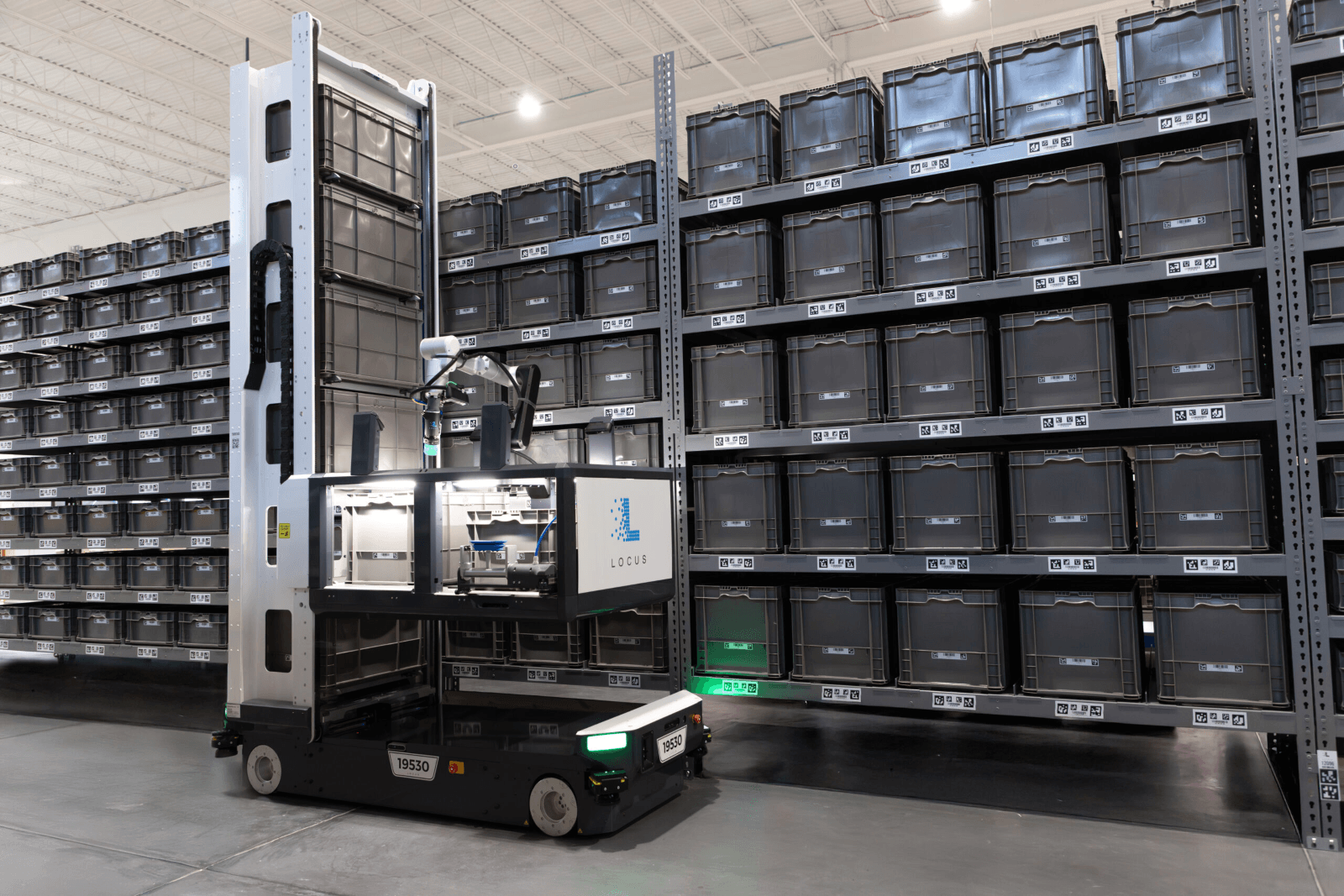
Locus Robotics warehouse autonomous mobile robot picking parts
Agility Robotics
Private, pending public listing. Agreed to merge with Churchill Capital Corp XI (Nasdaq: CCXI), a special purpose acquisition company, in a deal announced June 24, 2026 at a pre-money equity value of $2.5 billion [3]. Headquartered in Salem, Oregon.
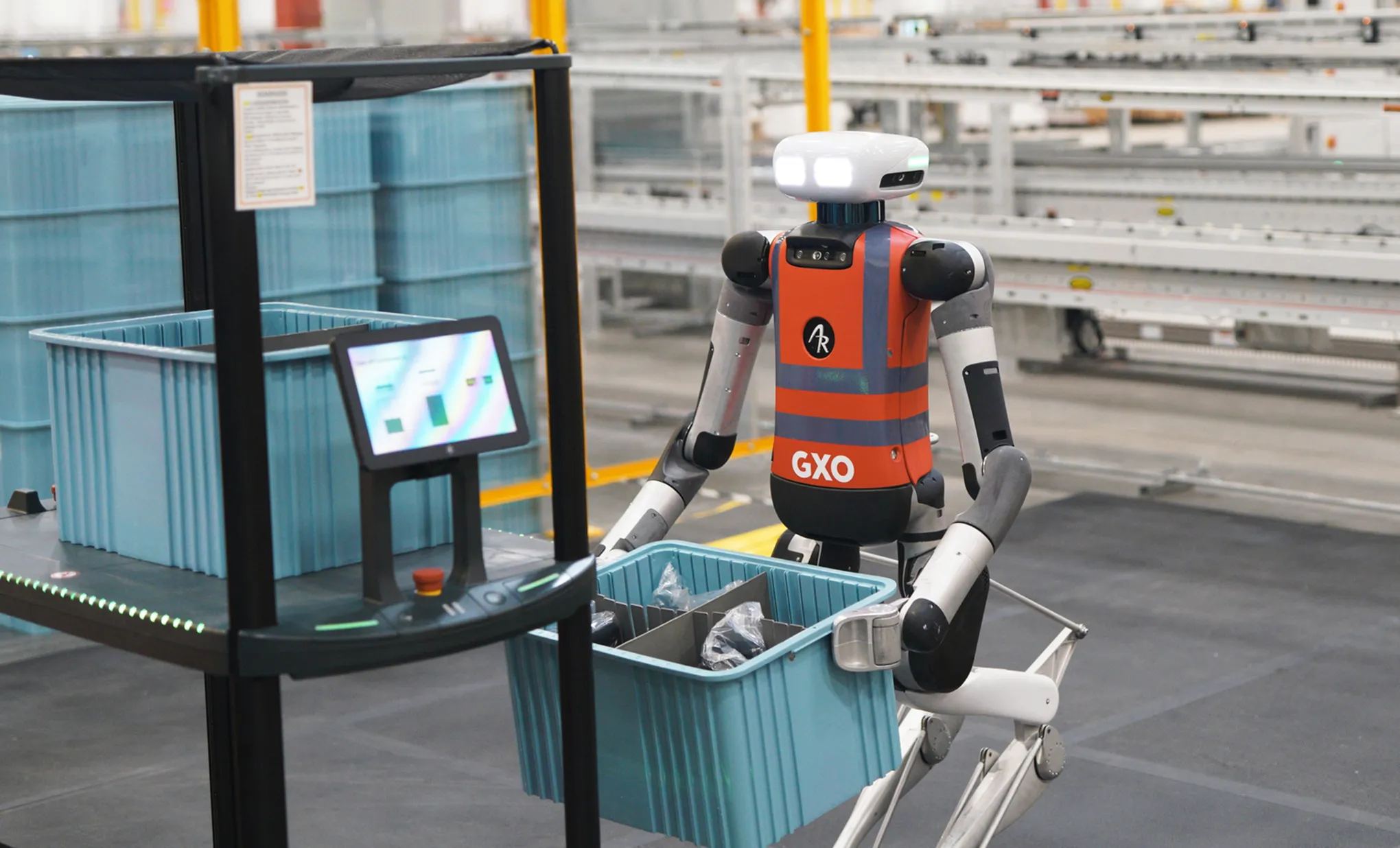
Agility make Digit, a humanoid robot the company says is already operating in commercial environments for Schaeffler, GXO, Toyota Motor Manufacturing Canada, and Mercado Libre [3]. Amazon appear in the story too, though not as a customer. Amazon are an early investor through their industrial fund, and have run multiple Digit pilots, including one at a warehouse in Sumner, Washington in 2023 [10]. A pilot is not a deployment, and the distinction matters in a company whose pitch to public investors rests on paying customers rather than trials.
Agility are taking a third path to the public market. Rather than raising another private round or filing a traditional listing, they are merging with a SPAC that already holds cash from public investors and is combining that pool with new money to take the company public directly [3]. The deal is expected to provide more than $620 million in gross proceeds: $420 million held in Churchill’s trust account, assuming no shareholder redemptions, plus roughly $200 million of new financing from investors buying newly issued stock at $10 per share in a structure called a PIPE, a private investment in public equity [3]. Foxconn led that PIPE, alongside existing backers including NVIDIA, Amazon, SoftBank Vision Fund 2, DCVC, and Playground Global [3].
The redemption qualifier is not boilerplate. SPAC shareholders can take their cash back rather than hold shares in the merged company, so the trust figure is a ceiling, not a floor.
Key dependency: the deal hasn’t closed. Churchill and Agility confidentially submitted a draft registration statement, a Form S-4, to the Securities and Exchange Commission on July 13, 2026, a required filing before shareholders can vote [11]. At last verification that filing had not been made public or declared effective, no vote had been scheduled, and Agility were not yet trading under the planned ticker, AGLT [11].
What to watch: whether the S-4 is filed publicly and declared effective in time for a shareholder vote, how far redemptions cut into the $420 million trust, and how long the gap between announcement and close stretches. Churchill shares closed at $16.61 on August 7, 2026, above the $10 reference price typical of an unmerged SPAC [12].
| Company | Role in Stack | Structural Position | Key Dependency | What to Watch |
|---|---|---|---|---|
| Standard Bots | Industrial robot arms financed through a public capital vehicle | $1 billion private valuation set by a round a Nasdaq-listed closed-end fund led | The fund's next mark on their Standard Bots stake | Whether BOT's premium to net asset value holds or narrows |
| Locus Robotics | Subscription-financed warehouse robotics | Valuation close to $2 billion set in November 2022, unconfirmed since | Growth against an almost four-year-old valuation mark | Any new priced round, and Nexera gripper deployment |
| Agility Robotics | Humanoid robotics going public through a SPAC and PIPE | $2.5 billion pre-money value pending SEC review and a shareholder vote | Form S-4 being filed and declared effective | S-4 timing, the vote, and redemption levels |
The Honest Tension
None of these three structures has been tested through an actual downturn in industrial robotics. RoboStrategy have never absorbed a markdown across their portfolio, and a premium of this size only works while the marks keep rising [2]. If a widely held private valuation like Standard Bots’ $1 billion gets cut, BOT’s public shareholders take that loss directly, a different exposure than a venture limited partner carries inside a private fund. Locus’s valuation is the oldest data point here, set before either rival path existed. Agility’s deal is not closed, and a stalled S-4, a failed vote, or heavy redemptions leave the company where it started: private, and priced at whatever the last agreement said.
This is editorial content. Rabbt is not a registered investment advisor and does not provide investment recommendationsThis issue reflects structural analysis and figures verified as of its publish date. The frontier economy moves quickly: funding rounds close, valuations shift, contracts get renegotiated, and timelines change. Details in this issue may no longer be current by the time you are reading it. Treat this as a structural snapshot, not a live feed, and verify anything time-sensitive independently before acting on it.Sources
[1] PR Newswire, corrected release, “Standard Bots Raises $200 Million Series C at $1 Billion Valuation to Scale American-Made, AI-Native Industrial Robots,” June 11, 2026.
[2] RoboStrategy, Inc., Form 424B3 prospectus filed with the SEC, dated August 7, 2026 (prospectus summary, current portfolio, resale registration, and purchase agreement sections).
[3] Agility Robotics and Churchill Capital Corp XI, “Agility Robotics to Go Public Through $2.5 Billion Merger with Churchill Capital Corp XI,” BusinessWire, June 24, 2026, as filed at Exhibit 99.1 to Churchill Capital Corp XI’s Form 8-K.
[4] Market data for RoboStrategy (Nasdaq: BOT), priced August 5, 2026. Secondary market-data source; requires a same-day refresh before publish.
[5] RoboStrategy, Inc., “RoboStrategy, Inc. Updates Net Asset Value as of July 31, 2026,” GlobeNewswire, August 12, 2026.
[6] PR Newswire, “Locus Robotics Announces $117 Million in Series F Funding, Bringing Its Valuation Close to $2 Billion,” November 29, 2022.
[7] Built In Boston, reporting total funding of $430 million at the Series F, November 29, 2022. Secondary; Locus do not disclose cumulative funding directly.
[8] Sacra, Locus Robotics company analysis, July 5, 2026. Third-party estimate of subscription pricing. Locus do not publish pricing, and no primary source for the figure was located.
[9] BusinessWire, “Locus Robotics Acquires Nexera Robotics, Advancing a Patented Breakthrough in Mobile Manipulation,” May 19, 2026.
[10] GeekWire, “‘Digit’ maker Agility Robotics to go public in $2.5B deal,” June 24, 2026, reporting Amazon’s Digit pilots including a 2023 pilot in Sumner, Washington.
[11] SEC EDGAR, Churchill Capital Corp XI Form 425, reporting the confidential Form S-4 submission dated July 13, 2026.
[12] Market data for Churchill Capital Corp XI (Nasdaq: CCXI), accessed August 7, 2026. Secondary market-data source; requires a same-day refresh before publish.
