
NASA's First Nuclear Mission to Mars Is Already Mostly Built. The Reactor Is the Part NASA Kept In-House.
The spacecraft and the thrusters came from commercial suppliers. The one component the mission is named for has no publicly named contractor.
Most coverage of SR-1 Freedom is counting down to a 2028 launch. The structural story is an acquisition story, and the largest open position sits in the piece NASA did not contract out.
By Rabbt | September 21, 2026
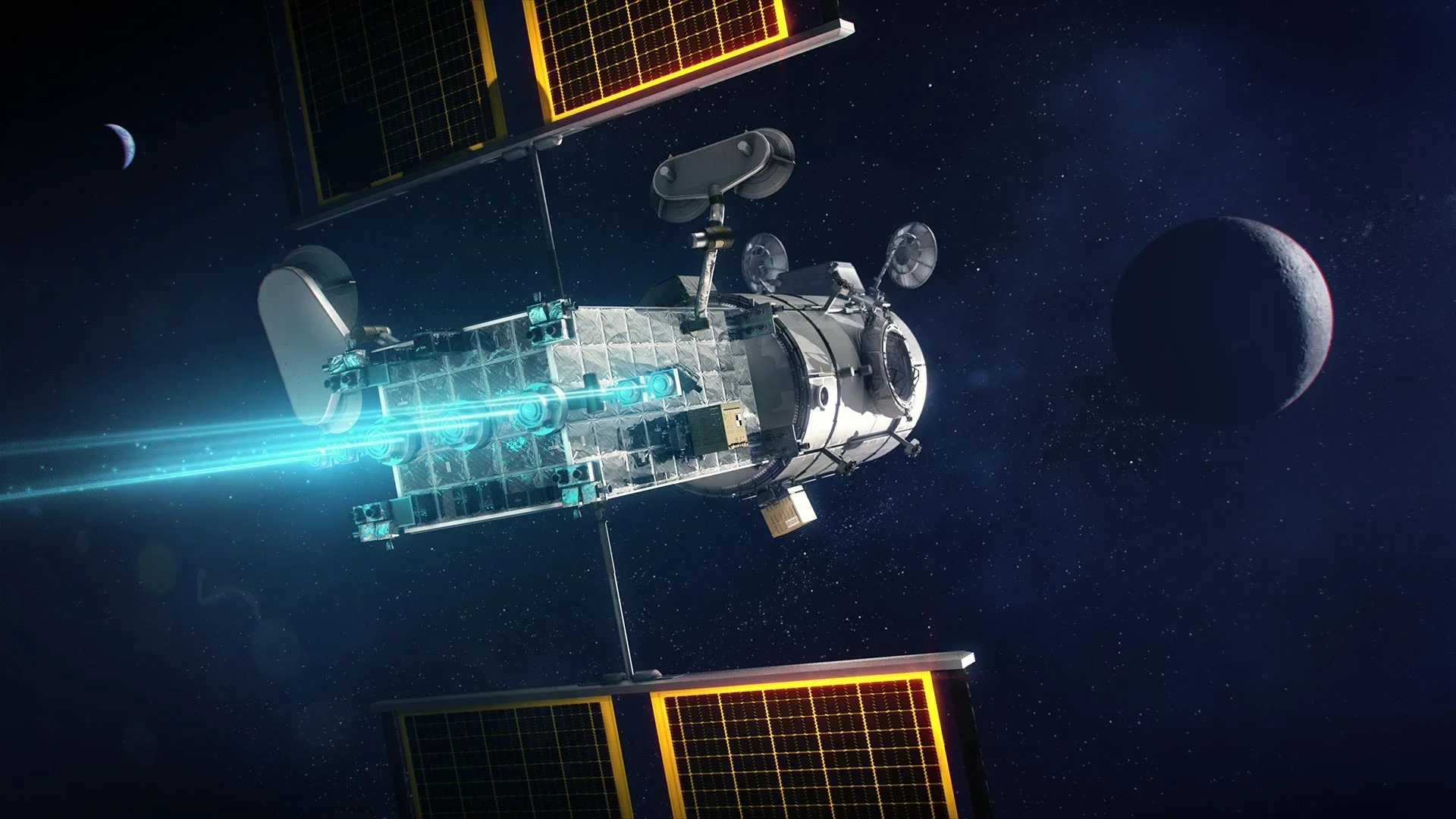
Nasa space reactor
NASA plans to send a working fission reactor toward Mars in late 2028 [1]. Most coverage reads that as a launch story, and a launch story is mostly a story about schedule risk. Read the mission as an acquisition instead, and the picture inverts. The spacecraft body already exists. A commercial supplier built it, and a company best known for landing on the Moon now owns that supplier [2]. The main thrusters were delivered in August 2025 [3]. The reactor, the one component the mission is named for, has no publicly named contractor. NASA says it's serving as prime integrator itself [4].
Why NASA Is Flying a Reactor, and Why Now
On March 24, 2026, the National Aeronautics and Space Administration (NASA) announced Space Reactor-1 Freedom at an event it called Ignition [1][5]. The mission is a demonstration of nuclear electric propulsion. A small fission reactor makes electricity; that electricity feeds ion thrusters, and the thrusters push the spacecraft with a gentle force for months on end. Chemical rockets burn hard for minutes. Electric thrusters push softly for a very long time, which makes a Mars transit possible with far less propellant [6].
The policy came first. On April 14, 2026, the White House Office of Science and Technology Policy issued the memorandum that launched the National Initiative for American Space Nuclear Power [7]. It directs agencies toward firm-fixed-price contracts with milestone-based payments and toward parallel competitions among several vendors rather than a single development award [8]. That's a procurement instruction, and procurement is where this story lives.
The fuel came next. On July 23, 2026, the Department of Energy made a conditional commitment to supply high-assay low-enriched uranium, or HALEU, to NASA in support of SR-1 [9][10]. The department is the federal agency that owns and allocates the nation's nuclear material. HALEU is uranium enriched to between 5 and 20 percent, richer than the fuel in a commercial power plant and far below weapons grade. It matters here because a reactor small enough to fly needs fuel that dense. One American plant is licensed to make it: the Centrus Energy cascade at Piketon, Ohio, licensed to 19.75 percent [11][12]. Centrus signed a binding contract with the department on June 30, 2026; the agreement was announced the following day. The contract finalized a $900 million task order first received in January 2026. It also moves the Piketon cascade into commercial operation [13][14].
Intuitive Machines
Listed: Nasdaq: LUNR. Price approximately $14.02 and market capitalization approximately $3.18 billion, intraday on September 16, 2026 [15]. Completed the acquisition of Lanteris Space Systems, formerly Maxar Space Systems, on January 13, 2026, for a headline $800 million before closing adjustments: $450 million in cash and $350 million in stock [2][16]. The acquisition-date fair value of the consideration was approximately $853.3 million, per the Form 10-Q for the quarter ended June 30, 2026 [17].
Intuitive Machines is the lunar lander company. That's the public narrative, and it's accurate as far as it goes. The Lanteris purchase changed what the company actually is. Lanteris built the Power and Propulsion Element, or PPE, the spacecraft bus NASA ordered years ago for Gateway, its planned station in lunar orbit. A spacecraft bus is the body of the machine: structure, power, avionics, and propulsion, essentially everything except the payload it carries. In its own quarterly filing, the company describes the deal as positioning it as a vertically integrated space prime [17].
Then NASA moved the bus. At the March 2026 announcement, the agency redirected the Gateway PPE into SR-1 Freedom [6][18]. Intuitive Machines states on its PPE page that it is committed to repurposing the element as the SR-1 Freedom nuclear electric propulsion element [19]. CEO Steve Altemus said the same on the May 14, 2026 earnings call [20], and Aviation Week reported it that April [21]. Ten weeks after closing the acquisition of a spacecraft manufacturer, the company held the largest finished element of a Mars mission. Those sources are primary for what the company says about its own role. None of them is a published contract, and the contractual structure between NASA and Intuitive Machines hasn't been made public.
The dependencies run almost entirely outward. Intuitive Machines doesn't control the reactor, the fuel, the launch vehicle, or the schedule. NASA controls the first and the last; the Department of Energy controls the second; and nobody controls the third yet: no launch vehicle has been selected and no launch has been booked [18][22]. Even the bus propulsion came from elsewhere. The PPE carries three 12-kilowatt thrusters from L3Harris and four 6-kilowatt units [23]. [Unverified] The four smaller thrusters are attributed to Busek by secondary aggregators rather than by any NASA document [24].
Every Monday at 6 AM Eastern. Subscribe at rabbt.org/frontier-file
One detail cuts against the simple reading that this company is a passenger on somebody else's nuclear program. In 2023, the Air Force Research Laboratory, the service's in-house science and technology arm, funded three design studies for nuclear-powered spacecraft under a program called JETSON. Lockheed Martin took $33.7 million, Westinghouse Government Services took $16.9 million, and Intuitive Machines took $9.4 million [25][26]. The company has its own paper trail in space fission, small but real.
What to watch: any public document that names Intuitive Machines in an SR-1 contract rather than in a repurposing commitment, and the language in the next quarterly filing describing whether the PPE work carries funded scope. [Inference] Based on prior-year cadence, third-quarter results would land in late October or early November. That filing would be the first to show the Lanteris integration and the SR-1 position in the same set of numbers. The condition that would change this read is narrow. A NASA award naming a commercial prime for the reactor, or a NASA statement that integration is moving outside the agency, would move the mission's open position off NASA's side of the ledger and onto a contractor's. The structural question would stop being about what NASA kept.
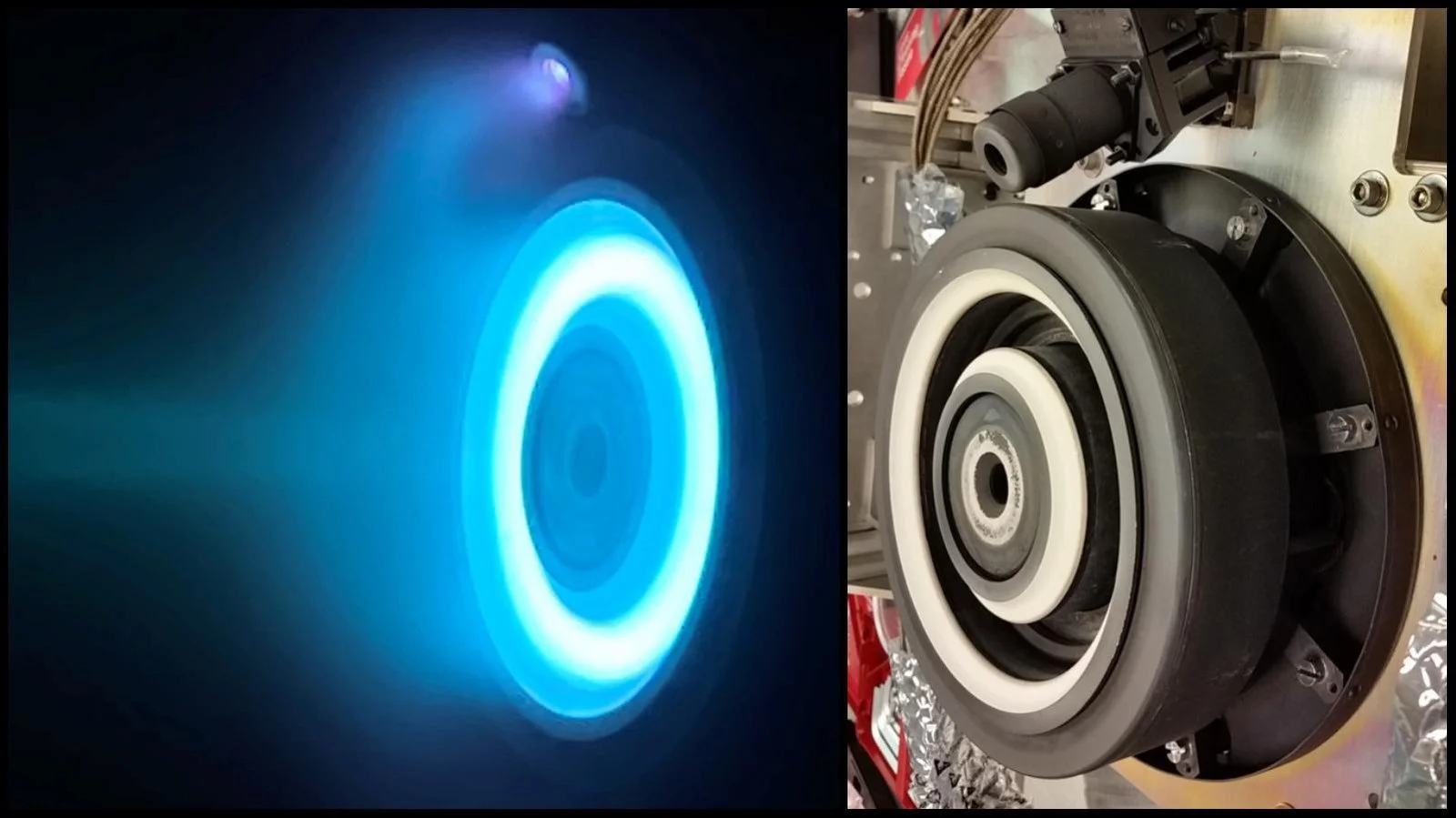
Hall-current thruster
L3Harris Technologies
Listed: NYSE: LHX. Price $252.62 and market capitalization $47.04 billion, as of September 15, 2026 [27]. A September 16 closing quote was not retrieved, so this is the freshest verified figure rather than a same-day close. Its Aerojet Rocketdyne unit builds the Advanced Electric Propulsion System.
The thrusters arrived before the mission did. On August 7, 2025, L3Harris announced that it had delivered three Advanced Electric Propulsion System units, or AEPS, for the lunar-orbiting Gateway [3]. Each one is a 12-kilowatt Hall thruster. A Hall thruster works by turning a gas into charged particles and throwing them out the back with a magnetic field. That produces very little push at any instant and an enormous amount of push over months. That's the engine class the whole SR-1 concept depends on, because a reactor that makes electricity is useless without something to spend the electricity on.
Timing is the structural point. NASA's own program overview states that AEPS qualification testing has begun and is expected to complete in 2027 [28]. Flight hardware was delivered in 2025 for a destination that changed in 2026, with the qualification campaign expected to finish the year before a late 2028 launch target. On December 16, 2025, L3Harris announced a further delivery covering completion of testing and delivery [29]. The two announcements are separate events and shouldn't be read as one.
So the contrast with the anchor is about scope, not about competition. L3Harris occupies a closed position: hardware built, delivered, and now working through qualification on a published timeline. Intuitive Machines occupies an open one, holding an asset whose role changed underneath it. The company's exposure here is small relative to its size, which is the honest way to read a $47 billion defense contractor's role in a single science mission.
What to watch: confirmation that AEPS qualification actually completes in 2027, and whether the delivered units fly as built or need modification for a spacecraft that is now carrying a reactor instead of solar arrays alone. A qualification slip compresses margin on a launch date that already has none to spare.
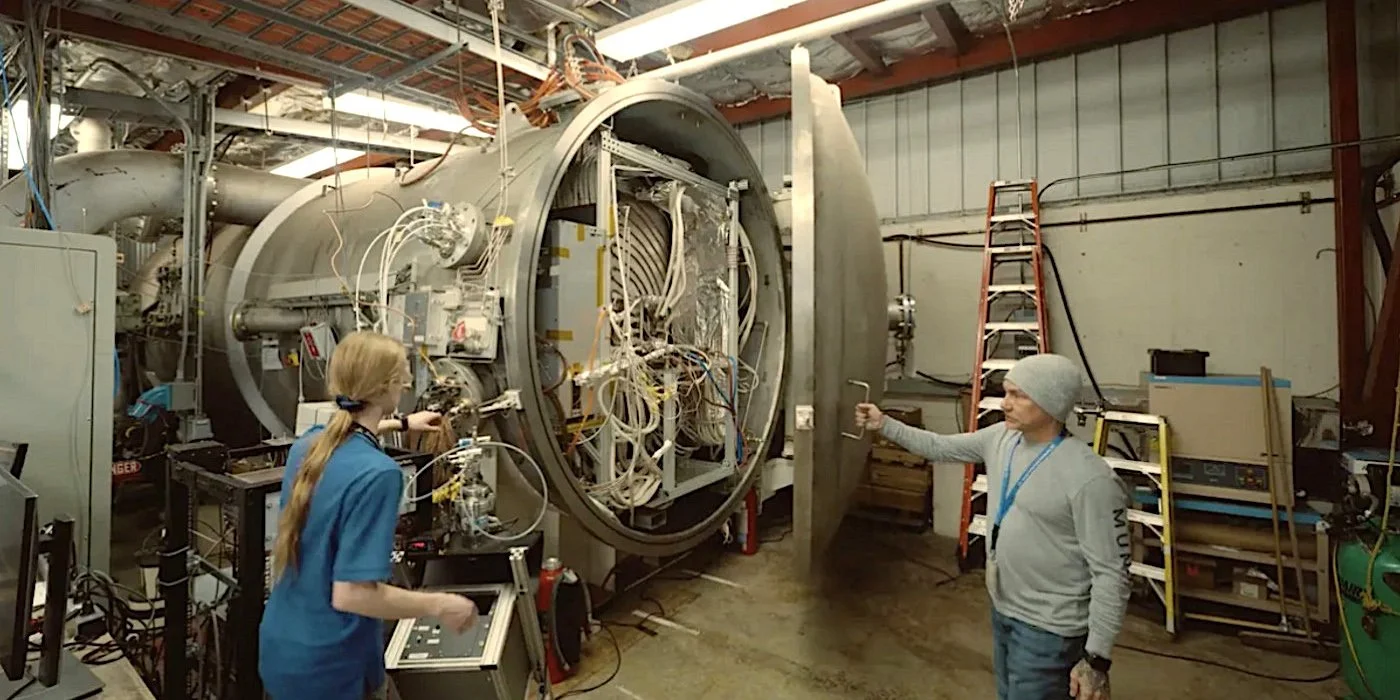
BWXT nuclear reactor fuel manufacturing facility Lynchburg Virginia
BWX Technologies
Listed: NYSE: BWXT. Price $145.66 at the September 16, 2026 close and market capitalization $13.35 billion, with shares near the low end of their 52-week range [30].
Speculation about the SR-1 reactor keeps landing on one company, and nobody with the authority to decide has confirmed it. What BWX Technologies has is the record. Under DRACO, the Demonstration Rocket for Agile Cislunar Operations, a joint program of the Defense Advanced Research Projects Agency, or DARPA, and NASA, BWXT developed the reactor and fabricated the HALEU fuel. Lockheed Martin was the prime and the spacecraft contractor [31]. DRACO was canceled in 2025, zeroed out in the budget request, with DARPA pointing to falling launch costs and a reassessment of the return on nuclear thermal propulsion [32].
The same pairing shows up again on the Air Force side. BWXT was selected in November 2023 as the nuclear fuel and component manufacturer for JETSON, the program under which Lockheed Martin holds the $33.7 million high-power award [33][25]. [Inference] That record puts BWX Technologies among a small group of American firms with flight-oriented space fission fuel work on the public record. That speaks to experience, not to who wins anything.
Meanwhile the one live procurement in this area points somewhere else. NASA posted a draft solicitation called SPARC, for Space Power And Reactor Capabilities, around August 30, 2026 [34]. It's a proposed multiple-award contract vehicle, an indefinite-delivery, indefinite-quantity structure that lets an agency issue task orders over years without competing each one from scratch. Its first task order targets the lunar LR-1 reactor, not SR-1 [35]. A final request for proposals is planned around November 15, 2026, with a proposed ordering period running from April 2027 through the end of 2031.
What to watch: whether the final SPARC request for proposals widens beyond the lunar reactor to cover flight reactor work generally, and whether any SR-1-specific solicitation or award appears on the federal contracting portal at all. The first named reactor contract is the event that reorders this entire picture.
| Company | Role in Stack | Structural Position | Key Dependency | What to Watch |
|---|---|---|---|---|
| Intuitive Machines | Spacecraft body for SR-1 Freedom | Owns Lanteris, builder of the Power and Propulsion Element NASA redirected into SR-1. Holds the largest finished element of the mission. Contractual structure with NASA not published | NASA-side decisions it does not control: reactor, fuel, launch vehicle, schedule | A public document naming the company in an SR-1 contract; funded scope language in the next quarterly filing |
| L3Harris Technologies | Electric propulsion for the spacecraft | Aerojet Rocketdyne delivered three 12-kilowatt AEPS thrusters on August 7, 2025, for Gateway, the element later redirected to SR-1. Closed scope, published timeline | AEPS qualification testing completing in 2027, one year before the launch target | Confirmed qualification completion in 2027; whether delivered units fly as built |
| BWX Technologies | Reactor and fuel experience, no SR-1 award | Built the reactor and fuel for the canceled DRACO program under Lockheed Martin as prime. Nuclear fuel and component manufacturer on the Air Force JETSON program | A reactor procurement that NASA has not opened; SPARC is currently scoped to the lunar LR-1 | Final SPARC request for proposals around November 15, 2026; any SR-1-specific solicitation or award |
The Honest Tension
The central finding here is a negative one, and negatives are weak evidence. No SR-1 reactor award, solicitation, request for proposals, or down-select surfaced anywhere in the public record through September 16, 2026 [36]. That's an absence of evidence at our source cap, not proof that no contract exists. NASA's 60-day integrated program plan, directed on May 22, 2026 and covering contracting strategy, has not been published [37]. DRACO experience may also transfer less cleanly than it looks: DRACO heated propellant directly, while SR-1 makes electricity for ion thrusters, and those are different machines. The claim of Centrus exclusivity rests on the fact that no contrary license has been granted since 2021, not on a fresh 2026 statement. And no launch vehicle is booked [22][38].
Rabbt Intelligence Note
A structured Research File on Intuitive Machines would map the company's dependency on decisions it does not control: reactor, fuel, launch vehicle, and schedule, against the March 24, 2026 redirection of the Power and Propulsion Element into SR-1 Freedom, and flag the naming of a reactor prime integrator as the condition most likely to shift this picture. The Relationship Graph would show that Intuitive Machines, L3Harris, and BWX Technologies are not competitors at all here: two of them hold finished hardware on a mission whose central component has no contractor, and the third holds the fuel and reactor experience that component would require; most coverage misses that connection entirely. The open question: if NASA holds reactor integration in-house through 2027, does the commercial space nuclear supply chain get built around SR-1, or around the lunar reactor program instead?
This is editorial content. Rabbt is not a registered investment advisor and does not provide investment recommendations.
This issue reflects structural analysis and figures verified as of its publish date. The frontier economy moves quickly: funding rounds close, valuations shift, contracts get renegotiated, and timelines change. Details in this issue may no longer be current by the time you are reading it. Treat this as a structural snapshot, not a live feed, and verify anything time-sensitive independently before acting on it.
Sources
1. NASA, "NASA Unveils Initiatives to Achieve America's National Space Policy," nasa.gov (March 24, 2026). https://www.nasa.gov/news-release/nasa-unveils-initiatives-to-achieve-americas-national-space-policy/
2. Intuitive Machines, "Intuitive Machines Completes Acquisition of Lanteris Space Systems" (January 13, 2026). https://investors.intuitivemachines.com/news-releases/news-release-details/intuitive-machines-completes-acquisition-lanteris-space-systems
3. L3Harris, "L3Harris Delivers Electric Thrusters for Lunar-Orbiting Gateway," l3harris.com (August 7, 2025). https://www.l3harris.com/newsroom/press-release/2025/08/l3harris-delivers-electric-thrusters-lunar-orbiting-gateway
4. NASA, "America Underway in Space on Nuclear Power," SR-1 and LR-1 fact sheet, PDF, nasa.gov (March 2026). States verbatim: "NASA serves as prime integrator." https://www.nasa.gov/wp-content/uploads/2026/03/america-underway-in-space-on-nuclear-power.pdf
5. NASA, "Space Reactor-1 Freedom" mission page, nasa.gov. https://www.nasa.gov/mission/space-reactor-1-freedom/
6. [Secondary] SpaceNews, Jeff Foust, "NASA to test nuclear electric propulsion with 2028 mission to Mars" (March 24, 2026). https://spacenews.com/nasa-to-test-nuclear-electric-propulsion-with-2028-mission-to-mars/
7. [Secondary] SpacePolicyOnline, "White House Releases Space Nuclear Initiative" (April 14, 2026). Accessible carrier for the White House Office of Science and Technology Policy memorandum NSTM-3, whose direct URL was not retrieved. https://spacepolicyonline.com/news/white-house-releases-space-nuclear-initiative/
8. [Secondary] K&L Gates, "Navigating Nuclear: White House Launches National Initiative for American Space Nuclear Power" (April 16, 2026). Quotes the firm fixed-price and milestone-payment directive language. https://www.klgates.com/Navigating-Nuclear-White-House-Launches-National-Initiative-for-American-Space-Nuclear-Power-4-16-2026
9. U.S. Department of Energy, "Energy Department to Distribute Third Round of HALEU to NASA and Radiant," energy.gov (July 23, 2026). https://www.energy.gov/ne/articles/energy-department-distribute-third-round-haleu-nasa-and-radiant
10. [Secondary] American Nuclear Society, "NASA and Radiant selected to receive HALEU," ans.org (July 27, 2026). Secondary coverage of the July 23 DOE announcement. https://www.ans.org/news/2026-07-27/article-8246/nasa-and-radiant-selected-to-receive-haleu/
11. U.S. Nuclear Regulatory Commission, "Centrus Energy Corp. / American Centrifuge Operating, LLC Gas Centrifuge Enrichment Facility Licensing." License SNM-2011, Amendment 13 (June 11, 2021), authorizing enrichment to 19.75 weight percent. https://www.nrc.gov/materials/fuel-cycle-fac/usecfacility
12. U.S. Department of Energy, "Centrus Produces Nation's First Amounts of HALEU," energy.gov. States the Piketon plant is the only facility in the United States licensed to enrich uranium up to 19.75 percent. https://www.energy.gov/ne/articles/centrus-produces-nations-first-amounts-haleu
13. Centrus Energy, "Centrus Signs Contract with Department of Energy for $900 Million Award" (July 1, 2026). Contract signed June 30, 2026, finalizing the task order received January 2026. https://www.centrusenergy.com/news/centrus-signs-contract-with-department-of-energy-for-900-million-award-intends-to-transition-haleu-production-cascade-to-commercial-operation/
14. Centrus Energy Corp., Form 8-K exhibit 99.1, U.S. Securities and Exchange Commission (filed July 2026). https://www.sec.gov/Archives/edgar/data/0001065059/000162828026046801/ex991_haleu900mpr.htm
15. [Secondary] Robinhood, LUNR quote, accessed September 16, 2026, intraday. https://robinhood.com/us/en/stocks/LUNR/
16. Intuitive Machines, Form 8-K exhibit 99.1, U.S. Securities and Exchange Commission (January 13, 2026). Headline consideration $800 million: $450 million cash and $350 million stock, before closing adjustments. https://www.sec.gov/Archives/edgar/data/1844452/000119312526011200/d89967dex991.htm
17. Intuitive Machines, Form 10-Q, quarter ended June 30, 2026, Note 3, Acquisitions, U.S. Securities and Exchange Commission. Acquisition-date fair value of consideration approximately $853.3 million. https://www.sec.gov/Archives/edgar/data/0001844452/000162828026056821/lunr-20260630.htm
18. [Secondary] NASASpaceflight, Caton and Bergin, "NASA unveils Space Reactor-1 Freedom mission to Mars in 2028" (March 24, 2026). https://www.nasaspaceflight.com/2026/03/nasa-sr1-freedom-mars-2028/
19. Intuitive Machines, "Power & Propulsion Element" product page, accessed September 16, 2026. Sourcing tier note: this page and the sources that follow it are primary for what the company states about its own role, and are not primary for the contractual structure between NASA and Intuitive Machines, which has not been published. https://www.intuitivemachines.com/build/power-and-propulsion-element
20. Intuitive Machines Q1 FY2026 earnings call, May 14, 2026, remarks of CEO Steve Altemus. Primary: company webcast. [Secondary] transcript carried by Seeking Alpha. https://seekingalpha.com/article/4904584-intuitive-machines-inc-lunr-q1-2026-earnings-call-transcript
21. [Secondary] Aviation Week, "Intuitive Machines To Repurpose Gateway Element For Mars Mission" (April 2026). https://aviationweek.com/space/space-exploration/intuitive-machines-repurpose-gateway-element-mars-mission
22. [Secondary] SpaceDaily, "NASA plans to send a working nuclear reactor toward Mars in late 2028." Characterizes SR-1 as a plan, not a booked launch with a named rocket. https://spacedaily.com/t-space-reactor-1-freedom-working-reactor-mars-2028/
23. [Secondary] Aviation Week, "NASA Aims To Launch Lunar Fission Reactor By 2030" (April 2026). Power and Propulsion Element thruster configuration: three 12-kilowatt units and four 6-kilowatt units. https://aviationweek.com/space/budget-policy-regulation/nasa-aims-launch-lunar-fission-reactor-2030
24. [Secondary] Gunter's Space Page, "SR-1 Freedom." Sole basis for the Busek attribution of the four 6-kilowatt thrusters, an aggregator rather than a NASA document. https://space.skyrocket.de/doc_sdat/sr-1-freedom.htm
25. Lockheed Martin, "Lockheed Martin Jets into Nuclear Electrical Spacecraft Power" (2023). JETSON High Power award, $33.7 million, Air Force Research Laboratory. https://www.lockheedmartin.com/en-us/news/features/2023/lockheed-martin-jets-into-nuclear-electrical-spacecraft-power.html
26. [Secondary] SpaceNews, "Air Force Research Lab awards design contracts for nuclear powered spacecraft" (October 2023). Westinghouse Government Services $16.9 million and Intuitive Machines $9.4 million awards. https://spacenews.com/air-force-research-lab-awards-design-contracts-for-nuclear-powered-spacecraft/
27. [Secondary] StockAnalysis.com, LHX quote and market capitalization (September 15, 2026). https://stockanalysis.com/stocks/lhx/market-cap/
28. NASA Technical Reports Server, document 20250008681, "Advanced Electric Propulsion System (AEPS) 12kW Hall Current Thruster Program Overview," IEPC 2025. States qualification testing has commenced and is expected to complete in 2027. https://ntrs.nasa.gov/citations/20250008681
29. L3Harris, "L3Harris Delivers Most Powerful Thrusters for NASA's Lunar Gateway," l3harris.com (December 16, 2025). A separate delivery announcement from the August 7, 2025 release; the two are not the same event. https://www.l3harris.com/newsroom/press-release/2025/12/l3harris-delivers-most-powerful-thrusters-nasas-lunar-gateway
30. [Secondary] StockAnalysis.com, BWXT quote and overview (September 16, 2026 close). https://stockanalysis.com/stocks/bwxt/
31. World Nuclear News, "BWXT to begin work on cislunar nuclear rocket engine and fuel." Lockheed Martin as DARPA prime and spacecraft contractor; BWXT developing the reactor and fabricating the fuel. https://www.world-nuclear-news.org/Articles/BWXT-to-begin-work-on-DRACO-engine-and-fuel
32. [Secondary] SpaceNews, "DARPA says decreasing launch costs, new analysis led it to cancel DRACO nuclear propulsion project" (June 2025). https://spacenews.com/darpa-says-decreasing-launch-costs-new-analysis-led-it-to-cancel-draco-nuclear-propulsion-project/
33. BWXT, "BWXT Selected as Nuclear Fuel and Component Manufacturer for AFRL's JETSON Program" (November 8, 2023). https://www.bwxt.com/bwxt-selected-as-nuclear-fuel-and-component-manufacturer-for-air-force-research-laboratorys-jetson-program/
34. NASA, draft SPARC solicitation posted on SAM.gov (approximately August 30, 2026). https://sam.gov/opp/e11e300dbee845d195c583ff87afa81a/view
35. [Secondary] New Space Economy, "What Does NASA's SPARC Lunar Reactor Procurement Reveal About Lunar Reactor-1?" (September 1, 2026). Draft indefinite delivery, indefinite quantity vehicle scoped to LR-1, not SR-1. https://newspaceeconomy.ca/2026/09/01/what-does-nasas-sparc-lunar-reactor-procurement-reveal-about-lunar-reactor-1/
36. [Secondary] Ex Terra Media, "Space Reactor-1 Freedom" (April 16, 2026). Newsletter stating no prime integrator has been named and listing a candidate field. Cited here as the best available direct evidence for an absence-of-evidence finding, not as proof of a negative. https://www.exterrajsc.com/p/space-reactor-1-freedom
37. NASA, Administrator Jared Isaacman workforce message, nasa.gov (May 22, 2026). Creates the Space Reactor Office and directs an integrated program plan for SR-1 Freedom and LR-1 within 60 days, covering schedule, budget, contracting strategy, personnel, facilities, and coordination. https://www.nasa.gov/blogs/workforce-updates/2026/05/22/a-message-from-administrator-jared-isaacman/
38. [Secondary] World Nuclear News, "NASA aims for nuclear-powered Mars mission in 2028." Reports NASA plans to develop the reactor and share the design with industry. https://world-nuclear-news.org/articles/nasa-aims-for-nuclear-powered-mars-mission-in-2028