
The Army Just Created a Third Rocket Motor Supplier. The Bottleneck Sits One Layer Above All Three.
The story everyone's reading is about competition arriving in a two-company duopoly. The real story is one valley in Utah that all three companies now depend on equally.
By Rabbt | September 14, 2026
x51-waverider-hypersonic
This week, the US Army moved Lockheed Martin and a Boeing-Anduril team into the next phase of a competition to build a second interceptor for its Enduring Shield air defense system, and cut a Rafael subsidiary from the running [1]. Boeing's entry uses a solid rocket motor from Anduril Rocket Motor Systems. That makes Anduril the third company in a business that's had exactly two players, Northrop Grumman and L3Harris, for decades.
Most people will read that as new competition finally breaking up an entrenched duopoly. That isn't quite what happened. Every motor these three companies build still needs the same oxidizer, ammonium perchlorate, and it's made at scale in the United States by exactly one company [3]. Three motor producers pulling from one chemical supplier isn't a wider market. It's the same narrow valve with a longer line forming behind it.
The structural position a company holds in its supply chain determines whether its capacity announcements are real or aspirational. That's what this analysis maps.
Why the Motor Business and Why Now
The United States is in the middle of the largest missile production ramp since the Cold War. Lockheed and the Pentagon signed an agreement in January 2026 to more than triple production of the PAC-3 MSE interceptor, from roughly 600 units a year to 2,000 by 2030. Nearly every major interceptor and cruise missile program, Patriot, Tomahawk, THAAD, and Standard Missile, is scaling at a similar rate, and nearly all of them run on solid rocket motors.
The Pentagon treats motor capacity as the pacing constraint on that ramp. Anduril's Mississippi facility, which opened for full-rate production in August 2025, has received a combined $58 million in Defense Production Act Title III funding on top of Anduril's own $75 million investment, and it's targeting 6,000 tactical motors a year by the end of 2026 [7]. L3Harris, meanwhile, is preparing to spin off its Missile Solutions unit, the former Aerojet Rocketdyne business, into a standalone public company, backed by a $1 billion Pentagon investment structured as a convertible security that converts to equity at IPO [9][10]. Both moves treat motor assembly capacity as the thing to fund.
Research group Govini has been more precise about where the real constraint sits. In an analysis of the missile supply chain, Govini identifies American Pacific Corporation, or AMPAC, as the only US-based source of ammonium perchlorate at scale, and calls that a single point of failure [4]. Northrop has invested in a limited in-house line of its own, but that production has been slow to reach certified scale, and AMPAC remains the merchant supplier almost everyone else buys from [3]. Adding a third motor producer doesn't change that. It adds a third customer to the same order book.
Every Monday at 6 AM Eastern. Subscribe at rabbt.org/frontier-file
American Pacific Corporation
Subsidiary of NewMarket Corporation (NYSE: NEU). [Unverified: NEU price and market cap need a fresh same-day pull; markets were closed on the day this draft was assembled. Recent trading has spanned a wide range over the past two months; do not carry a stale figure into the published piece.] NewMarket's core business is petroleum additives through its Afton Chemical division; AMPAC is a smaller, separately reported specialty materials segment [6].
AMPAC has been the country's leading merchant producer of ammonium perchlorate for years, and its production sits almost entirely in one place: a set of buildings outside Cedar City, Utah, deliberately spread apart so a single accident can't take out the whole supply [6]. That geographic concentration is the plainest version of the structural risk: America's missile propellant supply runs through one valley. It's not a hypothetical risk, either. In 1988, a different ammonium perchlorate plant, PEPCON in Henderson, Nevada, was destroyed in a major industrial explosion that wiped out a large share of the country's supply overnight [14]. AMPAC's own site layout, buildings spread apart specifically to contain a single incident, is a direct design response to that history.
AMPAC's customer list reads like a map of the entire industrial base this piece is about: Northrop Grumman, Aerojet Rocketdyne, and General Dynamics all buy AMPAC's ammonium perchlorate and combine it with other ingredients to cast the solid rocket propellant that goes into US missile and space launch programs [6]. Switching a qualified motor design to a different ammonium perchlorate source isn't a quick supplier swap. It requires requalifying the motor with the Department of Defense, a process that can take many months, which is exactly why AMPAC's position has held for decades even though everyone downstream knows the risk [15].
NewMarket's board approved a capital investment of up to $100 million to build a new ammonium perchlorate production line at the Cedar City site, targeting more than 50 percent additional capacity, with completion expected in 2026 [5]. That expansion is the single most important capacity number in this piece, because it's the input every other announced capacity number in this sector assumes will be available.
The key dependency runs in reverse from every other company here: AMPAC doesn't depend on Northrop, L3Harris, or Anduril. They depend on it. That asymmetry is the actual structural position in this sector, and it belongs to a specialty materials company most defense investors have never modeled.
What to watch: whether the approved capacity expansion, targeting over 50 percent additional output, completes on the 2026 timeline NewMarket has stated.
Anduril rocket
Anduril Rocket Motor Systems
Private. Parent company Anduril Industries raised $5 billion in a Series H round in May 2026, led by Thrive Capital and Andreessen Horowitz, at a $61 billion valuation, roughly double its valuation from a round about eleven months earlier [8].
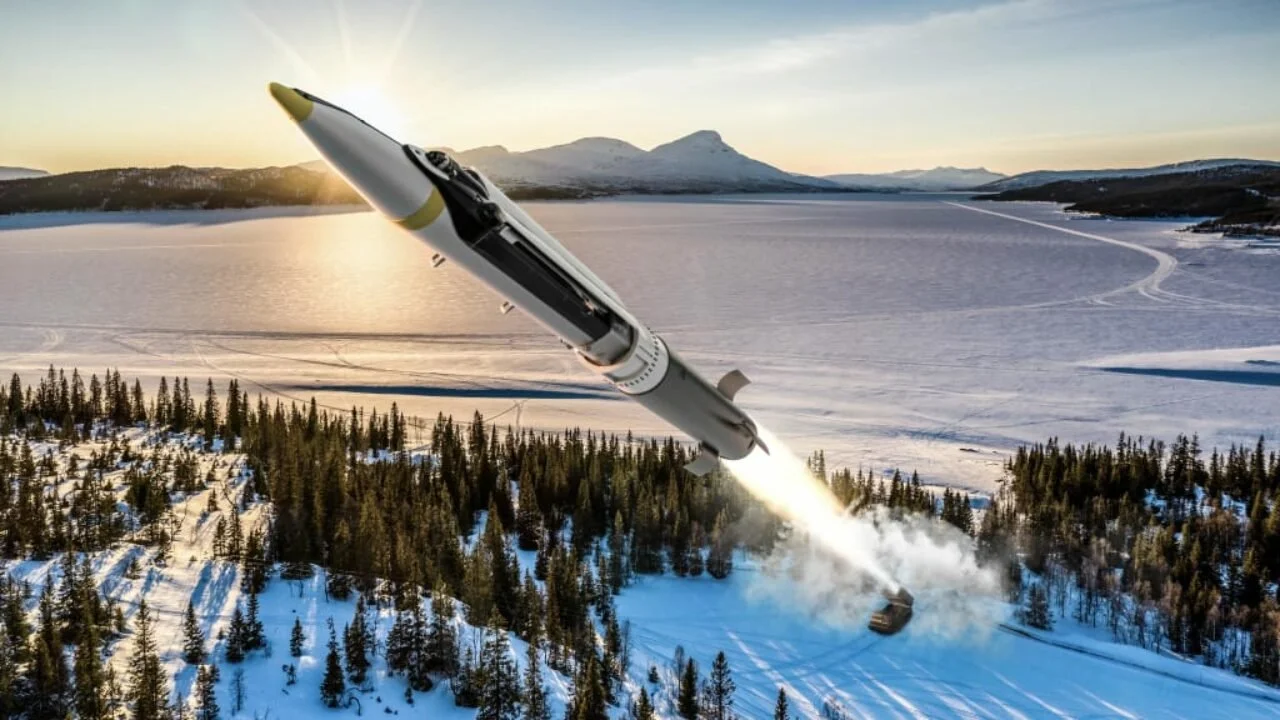
Anduril entered solid rocket motors through its 2023 acquisition of propellant company Adranos, then built a full-rate production facility in McHenry, Mississippi, which opened in August 2025. The company says it's already static test-fired more than 700 motors there and is targeting 6,000 tactical motors annually by the end of 2026, funded with $75 million of its own capital plus a total of $58 million in Defense Production Act Title III awards [7].
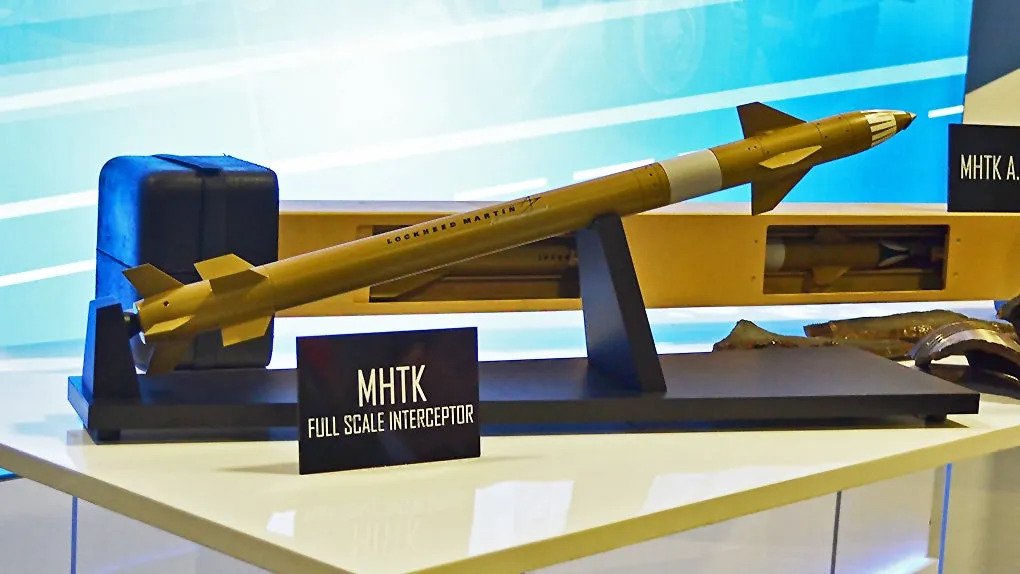
This week's development sharpens Anduril's structural position considerably. The Integrated Fires Protection Capability Increment 2, known as IFPC Inc 2, is the Army's effort to build a second, more capable interceptor for base defense against cruise missiles and drones, and it matters here because it's the program that just turned Anduril into a motor supplier for a program of record, not just a factory ribbon cutting. Boeing and Anduril's proposal, with Anduril supplying the motor, advanced past a Rafael subsidiary into phase two, alongside a competing Lockheed Martin entry developed with AeroVironment [1][2].
But scaling a motor line doesn't scale the oxidizer that fills it. Anduril's ramp to 6,000 units a year adds real demand to the same AMPAC order book that Northrop and L3Harris already draw from. What to watch isn't just whether the IFPC Inc 2 down-select goes Anduril's way. It's whether Anduril has locked in a supply agreement or capacity allocation with AMPAC that scales alongside its own production targets, something the company hasn't publicly detailed.
What to watch: whether Anduril discloses a firm AMPAC supply commitment that scales with its 6,000-motor target, and whether the Boeing-Anduril entry wins the IFPC Inc 2 down-select against Lockheed and AeroVironment.
IFPC American Iron Dome
L3Harris Missile Solutions
L3Harris Technologies (NYSE: LHX). [Unverified: LHX price and market cap need a fresh same-day pull; markets were closed on the day this draft was assembled. LHX has traded well below its 52-week high following its July earnings call and an August leadership change; do not carry a stale figure into the published piece.] Missile Solutions is being carved out as a separate entity ahead of a planned IPO.
L3Harris built its motor business on the Aerojet Rocketdyne assets it acquired in 2023, and Missile Solutions now produces propulsion for Tomahawk, Patriot PAC-3, and THAAD. In January 2026, the Department of Defense agreed to invest $1 billion in the unit through a convertible preferred security, the first deal of its kind under the Pentagon's direct-to-supplier procurement strategy; the investment closed in April 2026 [9][10]. The security converts to common equity when Missile Solutions completes its planned IPO, with L3Harris retaining majority control.
Two developments since that January announcement change the picture. First, on its July 29, 2026 earnings call, L3Harris pushed the planned IPO from the second half of 2026 to mid-2027, with leadership arguing that public markets weren't reflecting the business's value even as missile revenue grew sharply [11]. Second, and unrelated to the IPO decision, L3Harris removed CEO Chris Kubasik on August 18, 2026 following a code-of-conduct investigation; Sam Mehta, who had led the company's space and communications segments, is now CEO [12].
Neither development changes the structural read on AMPAC. The government is still becoming a part owner of the company that makes L3Harris's motors, a direct response to years of criticism over slow production timelines across the industrial base. That's a genuine escalation in how the Pentagon is treating this bottleneck. It's also, again, an investment in assembly capacity rather than in the chemical input that ultimately gates it. L3Harris, for all its decades of incumbency, a new CEO, and a government equity stake, buys ammonium perchlorate from the same single source as its newest competitor.
What to watch: whether the mid-2027 IPO timeline holds as market conditions evolve, and whether the leadership change affects how Missile Solutions manages its AMPAC dependency.
| Company | Role in Stack | Structural Position | Key Dependency | What to Watch |
|---|---|---|---|---|
| American Pacific Corporation (AMPAC) | Sole US merchant supplier of ammonium perchlorate, the oxidizer in most domestic solid rocket motor propellant | Every major US solid rocket motor producer buys from AMPAC's Cedar City, Utah site. Northrop has a limited in-house line that hasn't reached certified scale [3][4] | A single production valley outside Cedar City. NewMarket's approved capital and the pace of the new production line | Whether the approved capacity expansion, targeting over 50% additional output, completes on the 2026 timeline NewMarket has stated |
| Anduril Rocket Motor Systems | Newest entrant, positioned as the third major US solid rocket motor producer alongside Northrop Grumman and L3Harris | Mississippi facility opened for full-rate production in August 2025, targeting 6,000 tactical motors a year by the end of 2026. Selected with Boeing for the Army's IFPC Inc 2 second interceptor, advancing past Rafael's US unit in September 2026 | Ammonium perchlorate from AMPAC, the same input every other motor producer needs. Adding motor lines doesn't add oxidizer supply | Whether Anduril discloses a firm AMPAC supply commitment, and whether Boeing-Anduril wins the IFPC Inc 2 down-select |
| L3Harris Missile Solutions | Incumbent motor producer built on the former Aerojet Rocketdyne business, being carved out ahead of an IPO now targeted for mid-2027 | The Pentagon agreed in January 2026 to invest $1 billion in the unit through a convertible security that converts to equity at IPO; the deal closed in April 2026. A new CEO took over in August 2026. Motors power Tomahawk, Patriot PAC-3, and THAAD | Same chokepoint. Six decades of incumbency haven't reduced L3Harris's reliance on AMPAC's output | Whether the mid-2027 IPO timeline holds, and what valuation the market assigns a business the government now partly owns |
The Honest Tension
The chokepoint framing could be overstating a problem the industry is already fixing. Northrop has been building its own in-house ammonium perchlorate line. AMPAC's parent has approved a real capacity expansion, not just a press release, with completion expected this year. The Defense Production Act funding flowing to Anduril and the direct equity stake the Pentagon is taking in L3Harris both exist because Washington has identified this exact vulnerability and is paying to close it. It's possible that by the time Anduril's Mississippi line and AMPAC's new production line are both running at full rate, the single point of failure that Govini flagged becomes a two-year problem the industry solved rather than a permanent structural constraint. The counterargument is timing: energetics production lines take three to five years to design, build, and qualify with the Department of Defense, the FAA, and the ATF, and AMPAC's expansion was only recently approved. Three motor producers are scaling their assembly capacity faster than the chemical supply underneath them is probably scaling to match, and that mismatch, not the number of motor logos, is the thing worth tracking.
Rabbt Intelligence Note
A structured Research File on American Pacific Corporation would map its Cedar City production capacity against the combined 2026-to-2027 motor output plans of Northrop Grumman, L3Harris Missile Solutions, and Anduril Rocket Motor Systems, and flag the completion date of AMPAC's approved capacity expansion as the condition most likely to determine whether the missile production ramp hits its stated 2026-to-2030 targets. The Relationship Graph would show that AMPAC sits upstream of every named party in this piece, including two direct government-backed competitors, a structural position most coverage of the Boeing-Anduril down-select never mentions. The open question: does AMPAC's expansion timeline actually track ahead of the combined demand growth from three motor producers now racing to scale, or is the industry adding manufacturing capacity for a chemical it can't yet supply enough of?
This is editorial content. Rabbt is not a registered investment advisor and does not provide investment recommendations.
This issue reflects structural analysis and figures verified as of its publish date. The frontier economy moves quickly: funding rounds close, valuations shift, contracts get renegotiated, and timelines change. Details in this issue may no longer be current by the time you're reading it. Treat this as a structural snapshot, not a live feed, and verify anything time-sensitive independently before acting on it.
Sources
[1] Breaking Defense, “Army selects Lockheed, Boeing-Anduril team for next phase in IFPC Inc 2 competition,” September 2026.
[2] Aerotime, “Boeing, Anduril advance in US Army interceptor contest,” September 2026.
[3] TechCrunch, “Anduril opens solid rocket motor factory amidst ongoing chemical chokepoint,” August 2025.
[4] Breaking Defense, “With the boom for solid rocket motors for missiles, a perilous crunch in the supply chain,” January 2026.
[5] NewMarket Corporation, press release on AMPAC's approved $100 million Cedar City production line, April 2025 (finalized June 2025).
[6] Utah Business, “How American Pacific's $100M investment in Cedar City is powering the new space race,” June 2026.
[7] Anduril Industries and Inside Defense reporting on the Mississippi (McHenry) facility, DPA Title III funding, and 2026 production targets, February 2026.
[8] TechCrunch, Bloomberg, and GovConWire reporting on Anduril's $5 billion Series H at a $61 billion valuation, May 2026.
[9] Defense News, “Pentagon to invest $1B in L3Harris spinoff rocket motor firm,” January 2026.
[10] L3Harris Technologies, “L3Harris Closes $1B Investment from Department of War in Missile Solutions Business,” April 2026.
[11] SpaceNews, “L3Harris delays missile business IPO to 2027 despite surging defense demand,” July 2026.
[12] Breaking Defense, “Kubasik ousted as L3Harris CEO following conduct violation,” August 2026.
[13] NEU and LHX price and market cap: to be re-pulled from a single live source on the day of publish; not carried from this draft.
[14] The National Interest, “How Chemistry and Rocket Motors Constrain American Warfighting,” on the 1988 PEPCON explosion and its bearing on ammonium perchlorate supply concentration, April 2026.
[15] Govini, “From Factory to Fight: A Modern Framework for Defense Logistics,” on AMPAC's sole-source position and solid rocket motor requalification costs.