
Big Pharma has signed deals worth up to roughly $14 billion to acquire in vivo CAR-T biotechs. One of the few companies still standing on its own already granted AbbVie an option on part of its future.
Six acquisitions in about thirteen months swept up many of the independent companies building in vivo CAR-T therapy. One of the few still standing, Umoja Biopharma, isn't as free as it looks.
By Rabbt | October 19, 2026
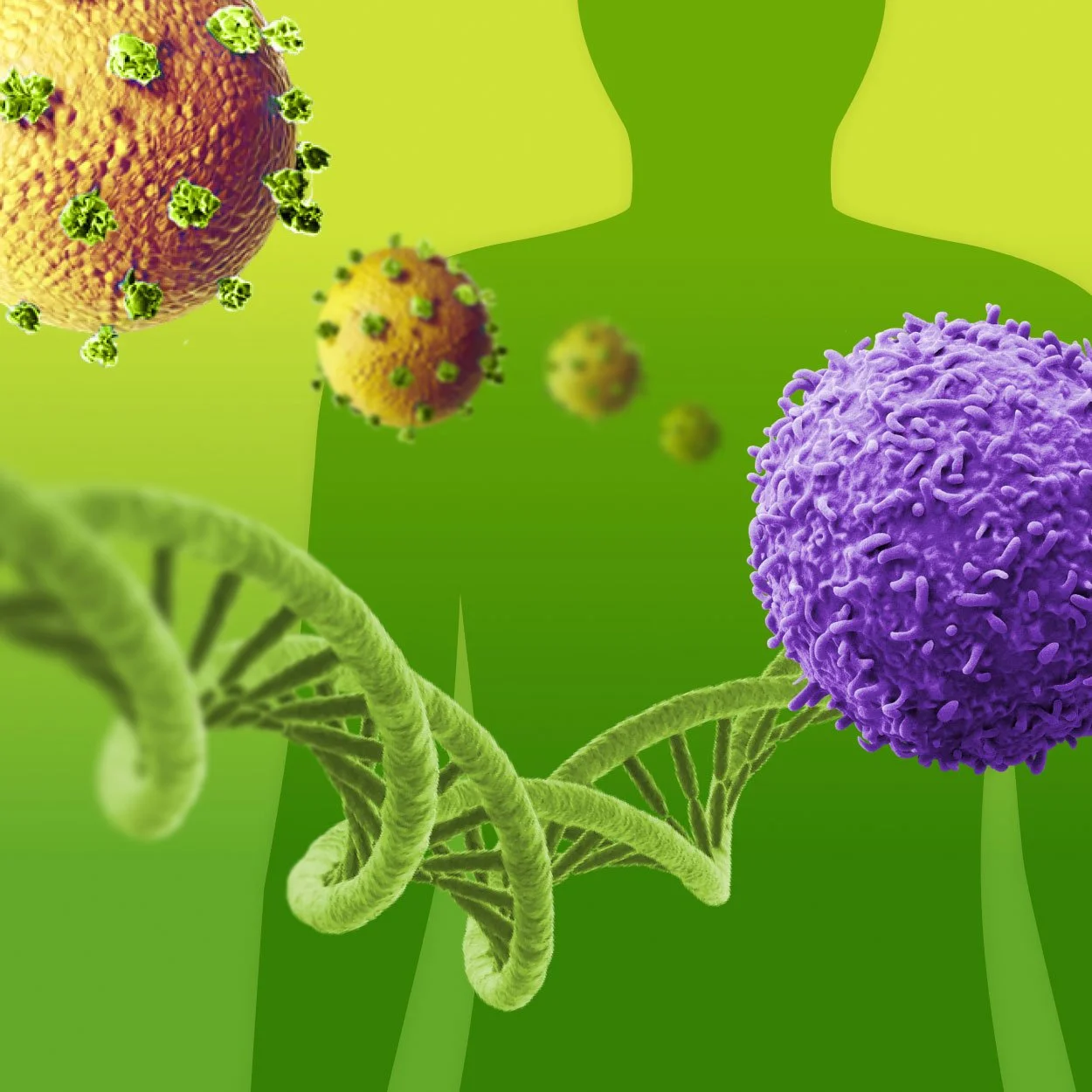
Cell therapy depiction of reprogrammable immune cells to fight cancer.
This month, two research teams published papers showing that immune cells can be reprogrammed to fight cancer without ever leaving the body. MIT engineers reported a way to reprogram natural killer cells using nanoparticles [1]. UC San Francisco scientists showed CRISPR gene-editing tools could build cancer-fighting T cells directly inside a mouse [2].
Most coverage treated those papers as scientific milestones. The more interesting story is written in deal terms. In about thirteen months, Big Pharma signed six in vivo CAR-T acquisitions worth up to roughly $14 billion, including milestones. Only a handful of clinical-stage companies are left outside that wave, Umoja Biopharma among them. Even Umoja isn't fully independent: AbbVie already holds a contractual option on part of its pipeline [3,4].
Why In Vivo CAR-T and Why Now
CAR-T stands for chimeric antigen receptor T-cell therapy, a cancer treatment built by reengineering a patient's own immune cells to recognize and kill tumor cells. The U.S. Food and Drug Administration has approved seven CAR-T therapies since 2017, and they've changed outcomes for some blood cancers [2]. The catch is manufacturing. Making a CAR-T cell today means drawing blood from the patient, shipping the cells to a specialized lab, engineering them there, and shipping them back, a process that can take weeks and cost hundreds of thousands of dollars [2]. Patients whose cancer is advancing while they wait don't always make it to the infusion.
In vivo CAR-T skips that trip. Instead of engineering cells in a lab, a company delivers the genetic instructions straight into a patient's bloodstream, using a modified virus or a fat-based nanoparticle, and lets the body build the CAR-T cells itself. The idea has circulated in labs for years. [Inference] What changed in 2025 and 2026 is that pharma buyers were willing to move before full clinical proof: several of the deals below bought platforms with little or no human data. Bristol Myers Squibb's purchase of Orbital Therapeutics, for instance, bought a candidate that was still preclinical [5].
The deals split into two technical camps. Some platforms use a modified lentivirus, a virus engineered to be harmless and used purely to ferry genetic cargo into cells. Others use a lipid nanoparticle, a tiny fat-based capsule that carries messenger RNA instead. Both approaches are aimed at the same outcome, reprogramming immune cells without ever taking them out of the patient, and Big Pharma has now bought into both camps.
Every Monday at 6 AM Eastern. Subscribe at rabbt.org/frontier-file
Umoja Biopharma
Private. Clinical-stage. Headquartered in Seattle, Washington. Founded 2019. Total funding: $363 million across three rounds [6].
Umoja Biopharma's VivoVec platform uses a modified lentivirus, a type of virus engineered to be harmless and used purely as a delivery vehicle, to carry new genetic instructions directly into a patient's T cells while they're still circulating in the bloodstream [7]. Those instructions tell the T cells to build a chimeric antigen receptor targeting a specific protein on cancer cells, the same end result as traditional CAR-T, without the weeks of lab work in between.
The company has two candidates in human trials. UB-VV111 targets CD19, a protein found on certain blood cancers, and earned the FDA's Fast Track designation on September 30, 2025, a status that speeds up the agency's review of treatments for serious unmet needs [8]. UB-VV400 targets CD22, a different blood-cancer marker. It is enrolled in an investigator-initiated trial in China, a trial run by outside physicians rather than Umoja itself, with data expected in the second half of 2026. The FDA also cleared Umoja to start its own U.S. trial, VIBRANT-1, in July 2026 [7]. The company has guided to dosing its first U.S. patient in the third quarter of 2026, though that hasn't been confirmed.
Here's where Umoja's independence gets complicated. In January 2024, AbbVie signed two option and license agreements with Umoja worth up to $1.44 billion combined [4]. The first gives AbbVie the exclusive right to license UB-VV111, the CD19 program, at a later date. The second lets AbbVie direct Umoja to develop up to four more in vivo CAR-T candidates against targets AbbVie itself chooses. Neither agreement is an acquisition, and AbbVie doesn't own Umoja. But a meaningful share of Umoja's pipeline is already subject to contractual rights held by one company.
That arrangement could be one reason Umoja has stayed off the acquisition list. A PitchBook analyst, speaking to Fierce Biotech after Eli Lilly's acquisition of Kelonia Therapeutics in April 2026, named Umoja as an obvious remaining target for a hungry buyer, then added that the existing AbbVie partnership could complicate a clean acquisition by anyone else [3]. The same analyst pointed to Chinese biotech Starna Therapeutics as another in vivo CAR-T company moving into the clinic, and Leerink Partners analyst Daina Graybosch flagged Legend Biotech's own in vivo candidate as one to watch [3]. Sana Biotechnology is worth watching too: the company told investors in its third-quarter 2025 results that it was increasing its focus on in vivo CAR-T programs [9]. The deals themselves cluster by buyer: AbbVie built its position around Capstan's lipid-nanoparticle platform, while Eli Lilly signed agreements for two separate platforms of its own, Orna and Kelonia, within about a ten-week span. In a field this consolidated, a biotech still standing on its own may be there partly because AbbVie already has contractual rights to part of its pipeline.
What to watch: whether AbbVie exercises its UB-VV111 option before a rival makes a competing move, and whether UB-VV400 turns out to be one of the four undisclosed candidates AbbVie has rights to expand into.
AbbVie-corporate-headquarters
Capstan Therapeutics
Formerly private and clinical-stage. Acquired by AbbVie, August 2025, for $2.1 billion [10].
Capstan took a different technical route to the same goal as Umoja: reprogramming T cells without removing them from the body. Instead of a modified virus, Capstan used a targeted lipid nanoparticle, a fat-based capsule, to deliver messenger RNA carrying the CAR instructions. Its lead candidate, CPTX2309, renamed ABBV-619 under AbbVie's internal pipeline numbering, targets CD19 and is in Phase 1 testing for B-cell-driven autoimmune disease rather than cancer [10].
AbbVie completed the acquisition in August 2025, paying $2.1 billion in cash, $1.9 billion net of the cash it acquired along with the company. AbbVie's own financial filings record the deal as an asset acquisition rather than a business combination [10], consistent with Capstan's development-stage profile.
Capstan is a clear marker of where several of this field's independent biotechs have ended up over the past year and a half: inside somebody else's balance sheet. Industry analysts reading the wave of deals see two motives behind it. Leerink Partners analyst Daina Graybosch told Fierce Biotech that much of the buying is defensive: companies with expensive ex vivo CAR-T platforms of their own would rather be the ones disrupting that model than watch someone else do it [3]. Gilead's Kite division, which sells two approved ex vivo CAR-T therapies that have seen recent sales declines amid intense competition, fits that pattern closely [3].
What to watch: whether ABBV-619's autoimmune data, once it reads out, shapes how AbbVie treats its separate option on Umoja's pipeline.
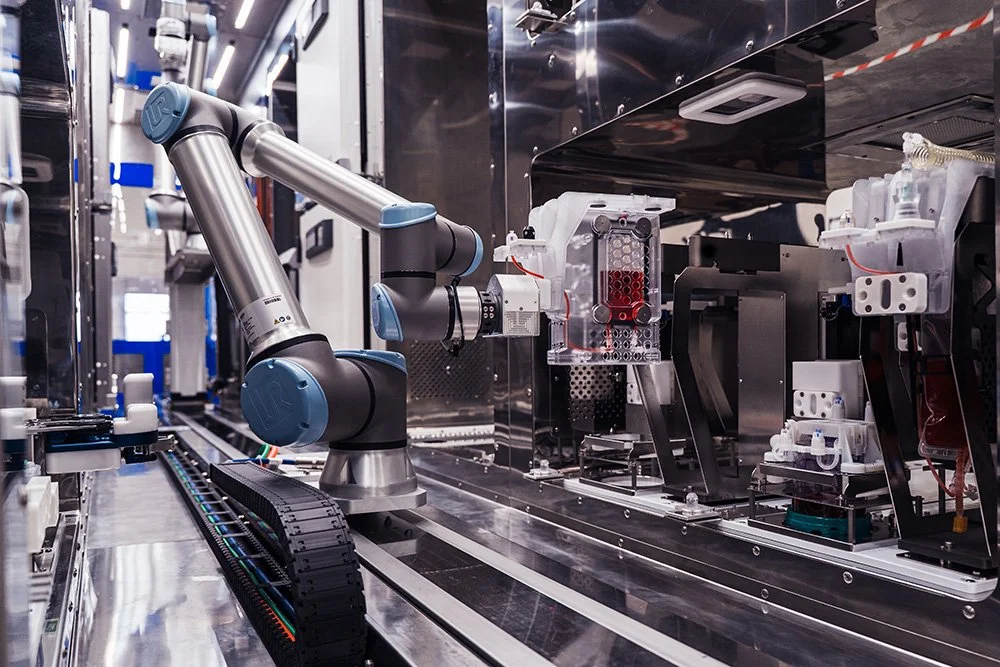
Cellares
Private. Headquartered in South San Francisco, California. Total funding: $682 million. Targeting an IPO in 2027 [11, 12].
Cellares is making the counter-bet. Rather than building a way to skip cell therapy manufacturing, it's building the infrastructure to make that manufacturing faster and cheaper at scale, on the assumption that cell therapy stays a physical, factory-built business for years to come.
The company's Cell Shuttle and Cell Q platforms automate work that currently takes CAR-T manufacturers weeks of manual lab time, operating as what Cellares calls an integrated development and manufacturing organization, a single company that both develops and produces a cell therapy for a drug maker rather than splitting the work across several vendors [11]. Cellares has raised $682 million total, including a Series D round that grew to $327 million in June 2026 with a $50 million investment from Prime Radiant Partners [11, 12]. It already has paying customers behind that thesis: a $380 million global manufacturing agreement with Bristol Myers Squibb and a ten-year commercial supply agreement with Cabaletta Bio, signed in April 2026 [11]. Beyond those two anchor clients, Cellares supports manufacturing programs for CAR-T, TCR-T (T-cell receptor T-cell therapy, a close relative of CAR-T that targets tumors through a different receptor), and progenitor T-cell therapies for additional drug developers, including TScan Therapeutics and ProTgen [11].
What to watch: whether in vivo clinical results from Umoja or from the platforms Lilly and AbbVie just bought slow new contract signings before Cellares' factories reach full commercial scale.
| Company | Role in Stack | Structural Position | Key Dependency | What to Watch |
|---|---|---|---|---|
| Umoja Biopharma | In vivo CAR-T developer (lentiviral) | Private, two clinical programs, AbbVie option on part of its pipeline since January 2024 | AbbVie's decision on whether to exercise its option | Whether AbbVie acts before a rival buyer, and whether UB-VV400 falls inside AbbVie's existing rights |
| Capstan Therapeutics | Acquired in vivo CAR-T developer (LNP-mRNA) | Folded into AbbVie, August 2025, for $2.1 billion | Runs on AbbVie's capital and pipeline priorities now, not its own | Whether ABBV-619's autoimmune data shapes AbbVie's broader in vivo strategy |
| Cellares | Automated ex vivo cell therapy manufacturing | Private, $682 million raised, anchor contracts with Bristol Myers Squibb and Cabaletta Bio | Ex vivo manufacturing retaining enough demand to support scaled capacity | Whether in vivo progress slows contract growth before its factories reach full scale |
The Honest Tension
This piece calls Umoja a holdout, but nobody has published a verified count of how many in vivo CAR-T companies are still independent. Starna, Legend, and Sana all have active in vivo programs of their own, and Umoja's distinction isn't that it's the only one left. It's that Umoja is a clinical-stage company with a named buyer already holding a contractual option on part of its pipeline, a narrower and more specific claim. Separately, it isn't confirmed whether UB-VV400 falls inside the four additional candidates AbbVie has rights to, in which case Umoja's independence is narrower than it looks even today. Cellares' strategy depends on ex vivo manufacturing generating enough volume to fill facilities built years before anyone knows how far in vivo CAR-T will actually reach.
This is editorial content. Rabbt is not a registered investment advisor and does not provide investment recommendations.
This issue reflects structural analysis and figures verified as of its publish date. The frontier economy moves quickly: funding rounds close, valuations shift, contracts get renegotiated, and timelines change. Details in this issue may no longer be current by the time you are reading it. Treat this as a structural snapshot, not a live feed, and verify anything time-sensitive independently before acting on it.
Sources
[1] MIT News. "Reprogrammed NK immune cells target cancer and autoimmune disorders." October 13, 2026. https://news.mit.edu/2026/reprogrammed-nk-immune-cells-target-cancer-and-autoimmune-disorders-1013
[2] University of California, San Francisco, via ScienceDaily. "Scientists reprogram immune cells inside the body to fight cancer." October 7, 2026. https://www.sciencedaily.com/releases/2026/10/261005071532.htm
[3] Maddox, Will. "After Lilly's $7B Kelonia deal, are there any in vivo CAR-T biotechs left to buy?" Fierce Biotech, April 24, 2026. https://www.fiercebiotech.com/biotech/frenzied-feeding-playing-defense-and-disruption-lillys-kelonia-acquisition-and-future-vivo
[4] AbbVie. "AbbVie and Umoja Biopharma Announce Strategic Collaboration to Develop Novel In-Situ CAR-T Cell Therapies." January 4, 2024. https://news.abbvie.com/2024-01-04-AbbVie-and-Umoja-Biopharma-Announce-Strategic-Collaboration-to-Develop-Novel-In-Situ-CAR-T-Cell-Therapies
[5] pharmaphorum. "BMS builds in 'in vivo' cell therapy with $1.5bn Orbital buy." October 2025. https://pharmaphorum.com/news/bms-builds-vivo-cell-therapy-15bn-orbital-buy
[6] The Pharma Letter. "Umoja Biopharma closes $100 million financing." January 14, 2025. https://www.thepharmaletter.com/umoja-biopharma-closes-100-million-dollar-financing
[7] Umoja Biopharma, via BioSpace. "Umoja Biopharma Announces FDA Clearance of IND Application for UB-VV400." July 16, 2026. https://www.biospace.com/press-releases/umoja-biopharma-announces-fda-clearance-of-ind-application-for-ub-vv400-the-industrys-first-known-cd22-directed-in-vivo-car-t-cell-therapy-for-relapsed-refractory-b-cell-malignancies
[8] Umoja Biopharma, via CGTLive. "Umoja Biopharma's In Situ CAR T Therapy UB-VV111 Fast-Tracked for Several R/R B-Cell Malignancy Indications." October 2, 2025 (designation granted September 30, 2025). https://cgtlive.com/view/umoja-biopharma-in-situ-car-t-therapy-ub-vv111-fast-tracked-several-b-cell-malignancy-indications
[9] Sana Biotechnology, Inc. "Sana Biotechnology Reports Third Quarter 2025 Financial Results and Business Updates." November 6, 2025. https://ir.sana.com/news-releases/news-release-details/sana-biotechnology-reports-third-quarter-2025-financial-results
[10] AbbVie Inc. Form 10-Q, quarterly period ended September 30, 2025. U.S. Securities and Exchange Commission, filed November 4, 2025. https://www.sec.gov/Archives/edgar/data/1551152/000155115225000049/abbv-20250930.htm
[11] Chowdhry, Amit. "Cellares Expands Series D To $327 Million With $50 Million Investment From Prime Radiant Partners." Pulse 2.0, June 15, 2026. https://pulse2.com/cellares-expands-series-d-to-327-million-with-50-million-investment-from-prime-radiant-partners
[12] D'Ascenzo, Monica. "Cellares closes a $327 million funding round and is accelerating towards an IPO in 2027." Il Sole 24 Ore, June 15, 2026. https://en.ilsole24ore.com/art/cellares-closes-a-327-million-funding-round-and-speeds-up-its-2027-ipo-AIkGBSgD