

Why future breakthroughs in computing, renewable energy, and medicine depend on metals most people overlook.
Introduction: The Invisible Backbone of Innovation
When people think about the future of technology, they picture rockets, robots, and AI supercomputers. Rarely do they picture a block of gold, a coil of silver wire, or a titanium alloy bolt. Yet without these metals, none of it works.
In 2025, as AI models grow more complex, EVs scale by the millions, and humanity inches closer to space settlements, demand for rare metals has surged. The very progress of innovation now hinges on elements that are centuries old — but suddenly indispensable again.
Market Snapshot (2025)
| Metal | Approx. Price (late 2025) | Key Drivers |
|---|---|---|
| Gold | ~$3,270/oz (Monex) | AI processors, medical devices, space hardware |
| Silver | ~$35.90/oz (MetalsDaily) | Solar, EVs, 5G networks |
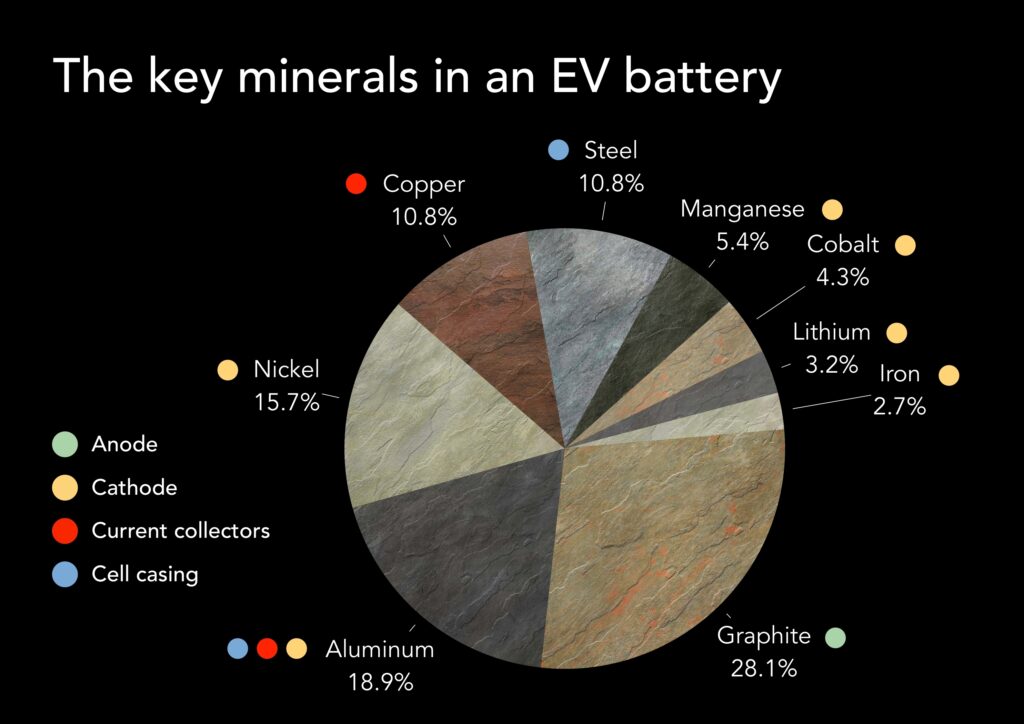
| Copper | ~$9,700–10,300/ton (Metal.com) | Power grids, EV wiring |
| Titanium | Contract-based pricing (not openly traded) | Aerospace, defense, biocompatible implants |
Note: Titanium doesn’t trade on public spot markets like gold or silver. Its price depends on long-term contracts in aerospace, defense, and medical industries.
Gold: The Quiet Cornerstone
Gold is more than a safe-haven asset — it’s the most reliable conductor in high-performance electronics. Unlike copper or silver, gold doesn’t corrode. That’s why AI chips, memory processors, and IoT connectors rely on gold plating for uninterrupted performance (World Gold Council).
- AI & Data Centers: Gold ensures high-speed data transfer with minimal energy loss — essential for running AI systems that crunch billions of calculations per second.
- Medical Devices: From pacemakers to nanoscale cancer treatments, gold’s biocompatibility makes it the safest choice inside the human body.
- Space Exploration: NASA still coats astronaut visors with thin gold films to shield against radiation. Satellites use gold to protect electronics from cosmic extremes.
Silver: The Green Conductor
Silver is the most conductive metal on Earth. As the world electrifies, its role is exploding.
- Solar Energy: Over 100 million ounces of silver are consumed annually in photovoltaic cells (CNBC). Without silver paste, solar cells wouldn’t carry current.
- Electric Vehicles: EVs use double the silver of traditional cars — in switches, battery packs, and charging systems. Demand is projected to rise 50% by 2030 (Reuters).
- 5G & Electronics: From antennas to touchscreens, silver drives connectivity. It even powers RFID and printed circuits in smart packaging.
- Health Tech: Silver’s antimicrobial properties make it essential for wound dressings, water filters, and hospital surfaces.
Titanium: The Strength of Tomorrow
While gold and silver are about conductivity, titanium is about strength and resilience. Strong as steel, but 45% lighter, titanium alloys are the backbone of aerospace, defense, and biomedicine.
- Aerospace & Spacecraft: Jet engines and rocket frames use titanium to withstand extreme heat and stress. SpaceX, NASA, and Boeing all rely on titanium for lightweight strength.
- Medical Implants: Titanium’s biocompatibility makes it the metal of choice for hip replacements, bone screws, and dental implants.
- Defense & Energy: Submarines, naval ships, and advanced reactors use titanium alloys for corrosion resistance.
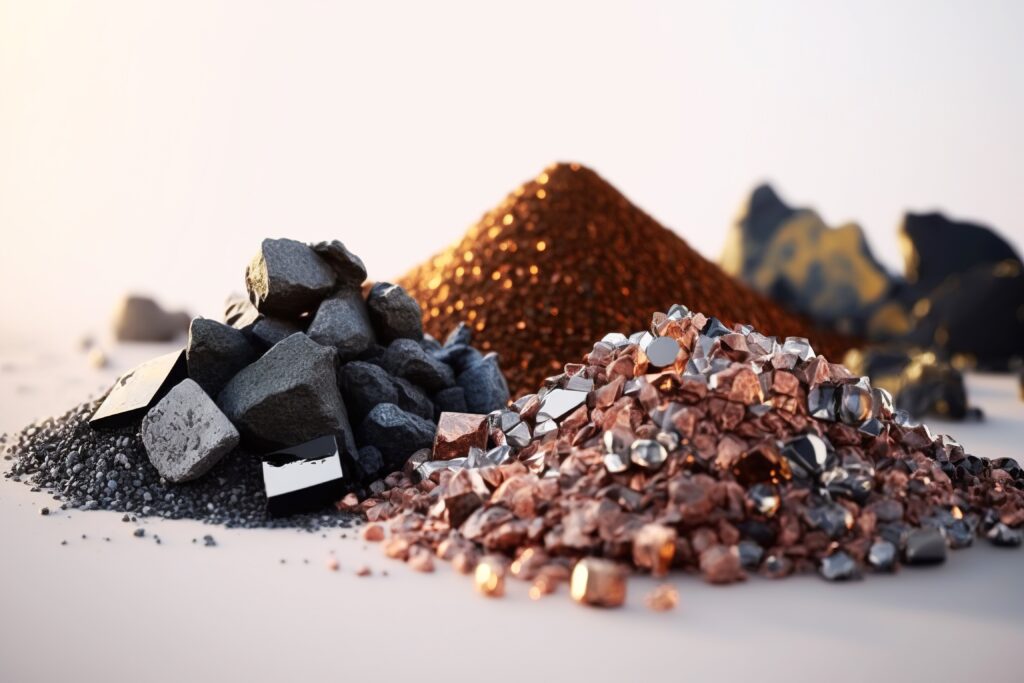
The Supply Chain Tension
Behind the demand lies fragility:
- Geopolitical dependence — China still controls much of rare earth processing, and Russia is a major titanium supplier (CSIS).
- Environmental concerns — Mining gold and silver generates vast waste rock; titanium refining is energy-intensive.
- Recycling surge — Recovering metals from e-waste (old smartphones, solar panels, turbines) is becoming critical. Companies like Apple and Umicore are scaling urban mining.
The Metals War: Barrick, Freeport, Iamgold, and the Race for Rare Earths
Inside the companies shaping the supply of gold, copper, and rare earths that power AI, EVs, and space tech.
Introduction: From Utility to Investment
In Part 1, we showed how gold, silver, and titanium form the hidden engine of AI, EVs, renewable energy, and space exploration. But understanding why these metals are crucial is only half the story.
The other half? Who controls the supply.
Investors in 2025 are watching mining and rare earth companies closely. As demand outpaces supply, the firms that can scale responsibly — and navigate geopolitical headwinds — may define the next decade of technology.
Rare Earths 101: Why They Matter
Rare earth elements (REEs) are a group of 17 metals like neodymium, dysprosium, and yttrium. Despite the name, they’re not geologically rare — but refining them is difficult, toxic, and concentrated in a few countries (chiefly China).
- Magnets: Neodymium and dysprosium make the strongest permanent magnets — critical for EV motors, wind turbines, and hard drives.
- Electronics: Europium and terbium light up LEDs and smartphone displays.
- Fiber Optics: Erbium amplifies internet signals.
- Quantum Tech: Researchers are testing rare earths as stable qubits in quantum computers.
This demand is surging — but access is fragile. That’s why mining firms like MP Materials, Lynas, and even gold/copper giants are becoming strategic assets.
Company Deep Dives
Barrick Gold (NYSE: GOLD)
- Core Focus: Gold and copper mining.
- Why It Matters: Barrick is one of the world’s largest gold producers, with operations in North America, Africa, and Latin America. Copper, increasingly essential for EV wiring and power grids, now represents a growing share of its portfolio.
- 2025 Context: Barrick has emphasized copper growth projects like Reko Diq (Pakistan), one of the largest undeveloped copper-gold deposits globally (CNBC). This positions Barrick as more than a gold play — it’s a long-term bet on electrification.
Freeport-McMoRan (NYSE: FCX)
- Core Focus: Copper (largest publicly traded copper producer) and gold byproduct.
- Why It Matters: Copper demand is skyrocketing thanks to EVs, solar, and expanded power grids. Freeport’s Grasberg mine in Indonesia is one of the largest copper-gold deposits in the world.
- 2025 Context: Copper prices (~$9,700–10,300/ton) keep Freeport profitable even with cost inflation. Analysts highlight its balance of scale and diversification, making FCX a top pick for exposure to the energy transition (Reuters).
Iamgold (NYSE: IAG)
- Core Focus: Mid-tier gold producer with mines in Canada, West Africa, and South America.
- Why It Matters: While smaller than Barrick or Freeport, Iamgold represents the growth story. Its Côté Gold project in Ontario is among Canada’s largest new mines, with production ramping in 2025.
- 2025 Context: Investors see Iamgold as a leveraged play on rising gold prices (~$3,270/oz). With debt reduction and new output, it’s positioned for upside if gold demand from AI and space sectors keeps climbing (Seeking Alpha).
MP Materials (NYSE: MP)
- Core Focus: Rare earth mining and processing (Mountain Pass mine, California).
- Why It Matters: MP is the only large-scale U.S. rare earth miner and separator. Its neodymium-praseodymium (NdPr) production feeds magnets for EVs, defense, and electronics.
- 2025 Context: Backed by $400M+ from the U.S. Department of Defense, MP is scaling into magnet production — aiming to close the loop from mine to finished magnet in North America (DoD announcement).
Lynas Rare Earths (ASX: LYC, OTC: LYSDY)
- Core Focus: Rare earth mining (Mt. Weld, Australia) and separation (Malaysia).
- Why It Matters: The largest non-China rare earth producer, Lynas is a critical supplier for Japan and the West.
- 2025 Context: Higher average selling prices (A$60/kg+) boosted revenue, but net profit dipped due to rising costs. Still, Lynas remains strategically vital as countries push for supply diversification (Mining.com).
Comparative Table: Top Rare Metal & Mining Companies (2025 Snapshot)
| Company | Core Metals | 2025 Highlights | Risks |
|---|---|---|---|
| Barrick (GOLD) | Gold, Copper | Expanding Reko Diq, strong gold output | Geopolitical risk, gold price volatility |
| Freeport (FCX) | Copper, Gold | Grasberg expansion, EV copper demand | High capex, Indonesia regulatory risk |
| Iamgold (IAG) | Gold | Côté Gold ramp-up, debt reduction | Smaller scale, execution risk |
| MP Materials (MP) | Rare Earths (NdPr) | DoD support, magnet production push | Price swings, single-site dependence |
| Lynas (LYC) | Rare Earths | Largest non-China refiner, high ASPs | Rising costs, Malaysia regulatory scrutiny |
Investor Angles to Watch
- Price Volatility vs. Structural Demand
Metals markets swing, but AI, EVs, and renewable adoption provide a multi-decade growth runway. - Geopolitical Leverage
With China dominating rare earth refining, U.S. and Australia-based companies like MP and Lynas hold strategic appeal. - ESG & Recycling
Barrick and Freeport emphasize sustainability reporting, while recycling firms like Umicore are emerging as complementary plays. Expect rising demand for “green metal” branding. - Public Sentiment
As more people realize their AI assistants, solar roofs, and EVs depend on these metals, companies controlling supply could see valuation premiums.
Closing: Beyond Earth
Investors are already speculating about metals beyond Earth. Lunar regolith is rich in titanium and rare oxides; asteroids may contain platinum-group metals in concentrations unimaginable on Earth. Companies like Planetary Resources (now defunct) showed how early the hype can be — but the interest will return as launch costs fall.
The lesson for now: metals are no longer background commodities. They are the strategic choke points of future technology.
0 Comments