
The Post-Lithium Battery Story Is Two Races.
CATL Just Made One of Them Real.
Most coverage of the sodium-ion launch is reading it as a lithium competitor. It is not. The battery industry quietly bifurcated, and three companies now control different layers of what comes next.
By Rabbt | June 29, 2026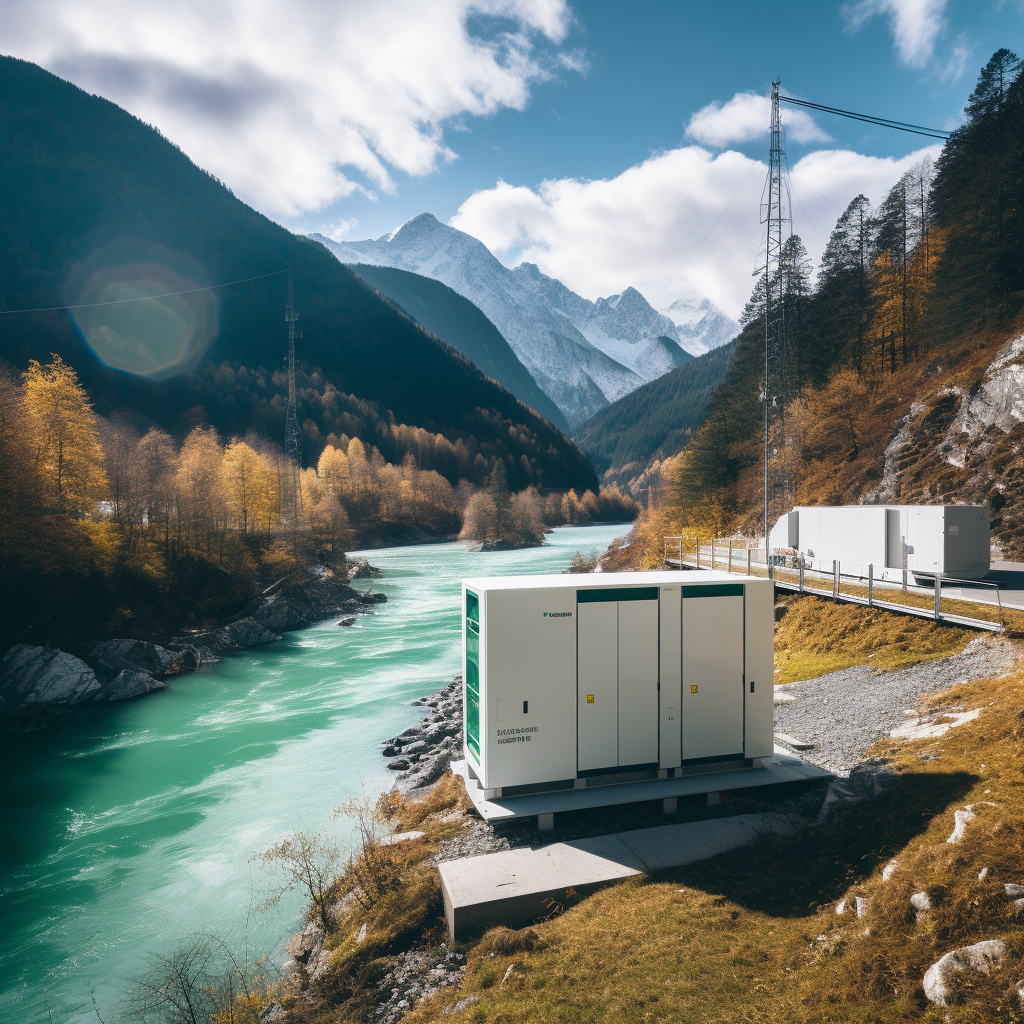
A white CATL TENER sodium‑ion battery container stands beside a turquoise mountain river, symbolizing clean grid energy.
On June 22, in a Munich auditorium, CATL unveiled the TENER Sodium Energy Storage System. Fifteen thousand cycles at 25 degrees Celsius. Twenty-five to thirty year service life. Ninety-two percent capacity retention at minus twenty. The world's first field-validated sodium-ion grid storage product, with one gigawatt-hour of shipments committed by the end of the year and a sixty-gigawatt-hour HyperStrong contract already on the books.
Most coverage is reading this as the start of the post-lithium era. That read is half right, but structurally wrong. What happened in Munich is not lithium versus sodium. It is the moment the battery industry visibly bifurcated. The race for the grid, and the race for the car, are now two different races, running on two different chemistries, serving two different customer bases. Sodium-ion did not arrive to compete with lithium - it arrived to solve a problem lithium was never built for.
Why Sodium and Why Now
The lithium-ion battery is the most studied energy storage device in human history, and suddenly finds itself approaching the absolute limitation of physics. Lithium-ion cells have been optimized for the same constraint for thirty years: pack as much energy as possible into the smallest, lightest package, because the package was going into phones, laptops, and eventually, the car. Density was the only variable that mattered.
Grid storage does not care about density. A utility installing one gigawatt-hour of storage at a substation has acres of land and no weight constraint. What it cares about is cost per kilowatt-hour over decades, supply chain risk on lithium and cobalt, fire risk in dense electrical environments, and the ability to absorb a multi-day weather event without losing capacity. Lithium-ion solves the density problem brilliantly, but density was never the grid's question. Lithium solved none of those problems gracefully.
That mismatch created an opening. Sodium is more than one thousand times more abundant than lithium and broadly distributed across continents, and iron is the fourth most common element in the Earth's crust; both are abundant precisely because nobody had tried to optimize a battery around them at industrial scale. Until now.
The frontier of energy storage is not one race, it’s two. And the chemistries diverge from here.
Every Monday at 6 AM Eastern. Subscribe at rabbt.org/frontier-file
CATL: The Vertically Integrated Sodium Play
Listed: HKEX: 3750 / Shenzhen: 300750. World's largest battery manufacturer by output. Cumulative sodium-ion R&D investment of approximately €1.2 billion since 2016. More than 1,600 patent families and over 200 globally granted patents in sodium-ion. Manufacturing capacity of approximately 40 GWh dedicated to sodium-ion at Fuding, with an additional 160 GWh planned at Jining.CATL's TENER Sodium product is not the first sodium-ion battery, but it is the first one with a credible commercialization plan attached. The 30 MWh modular system is built around the company's proprietary NFPP cathode chemistry and supports 1, 2, 4, 6, and 8-hour discharge applications, the entire duration window utility-scale grid storage actually needs. Each 42-ton module integrates into existing lithium-ion site footprints without redesign, which dissolves the switching cost for utilities and developers already operating CATL-platform lithium installations. A 1 GWh project can be built with thirty-four of these modules.
The structural read on what CATL has actually built is less about chemistry than about supply chain control. CATL spent a decade vertically integrating sodium-ion: cathode and anode materials at industrial scale, cells, battery management system, thermal architecture, and grid-scale system integration. That stack now runs entirely outside the lithium supply chain. In April 2026, the company signed a three-year, 60 GWh supply agreement with Chinese system integrator HyperStrong, by far the largest single commercial sodium-ion contract on record. The first domestic deliveries begin in September 2026, and global commercial deliveries are scheduled for June 2027.
The key dependency is not technical. It is geopolitical. CATL is a Chinese company shipping into a global market where Western utility procurement is increasingly subject to security review. The TENER Sodium launch event was held in Munich for a reason. Europe is the segment most likely to accept CATL hardware at scale in 2027 and 2028, meaning North American deployment will face friction with this new competition.
What to watch: whether the September China deliveries hit the 1 GWh target by end of 2026, and whether the June 2027 global rollout produces a named first commercial deployment in Europe before competitors close the gap. The first sodium-ion gigawatt-hour-scale project commissioned outside China will signal whether this is a Chinese market story or a global one.
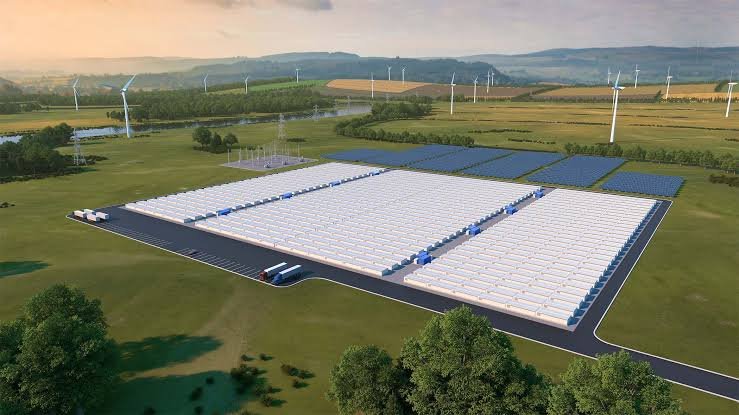
A modern FORM Energy factory sits in a wide green field, surrounded by tall white wind turbines under a bright sky, illustrating renewable manufacturing in West Virginia.
Form Energy: The American Iron-Air Parallel
Private. Total funding: approximately $1.4 billion. Lead investors: Breakthrough Energy Ventures (Bill Gates), Energy Impact Partners, TPG Rise Climate, ArcelorMittal, GE Vernova, T. Rowe Price. February 2026: approximately $1 billion commercial agreement with Google to power a data center in Minnesota. The company has stated it plans a public market debut in 2027.Form Energy is solving a different version of the same problem. The company manufactures iron-air batteries, which generate electricity through the reversible rusting of iron, and is targeting a discharge duration of 100 hours at a system-level cost approaching $20 per kilowatt-hour- a cost target roughly one-tenth of the installed cost of lithium-ion.
The chemistry sounds primitive, but the structural play is anything but. PacifiCorp, the Berkshire Hathaway utility, included 3,073 MW of iron-air storage in its 2025 Integrated Resource Plan, signaling long-term utility-scale integration. Google committed approximately $1 billion in February 2026 to a Form Energy installation that will provide multi-day backup for a Minnesota data center, the largest single corporate offtake commitment for long-duration storage to date. The DOE has provided $147 million for an 85 MW / 8,500 MWh project in Maine that, when commissioned, will be the largest battery in the world by megawatt-hour capacity.
Form's Weirton, West Virginia factory is being built on the site of a former steel mill, and the chemistry is deliberately designed to plug into existing iron and steel industry supply chains. That positions Form as the closest thing the United States has to a domestic, scale-ready alternative to imported lithium for grid storage. The trade-off is round-trip efficiency; iron-air batteries return roughly 40% to 50% of input energy, while lithium-ion returns 90%. For most applications, that gap kills the economics. For multi-day backup against weather events and renewable droughts, where the input energy is curtailed by wind and solar priced near zero, the math works.
Key dependency: manufacturing scale. Form Energy targets 500 MW / 50 GWh of annual production capacity at Weirton by 2028 to deliver against announced commitments. The company's commercial trajectory depends entirely on the factory ramping on schedule.
What to watch: the on-time commissioning of the first commercial deployments through 2027, particularly the Great River Energy pilot in Minnesota and the New England transmission project. A delayed factory ramp shifts the long-duration storage market toward CATL's sodium-ion product and away from iron-air entirely.
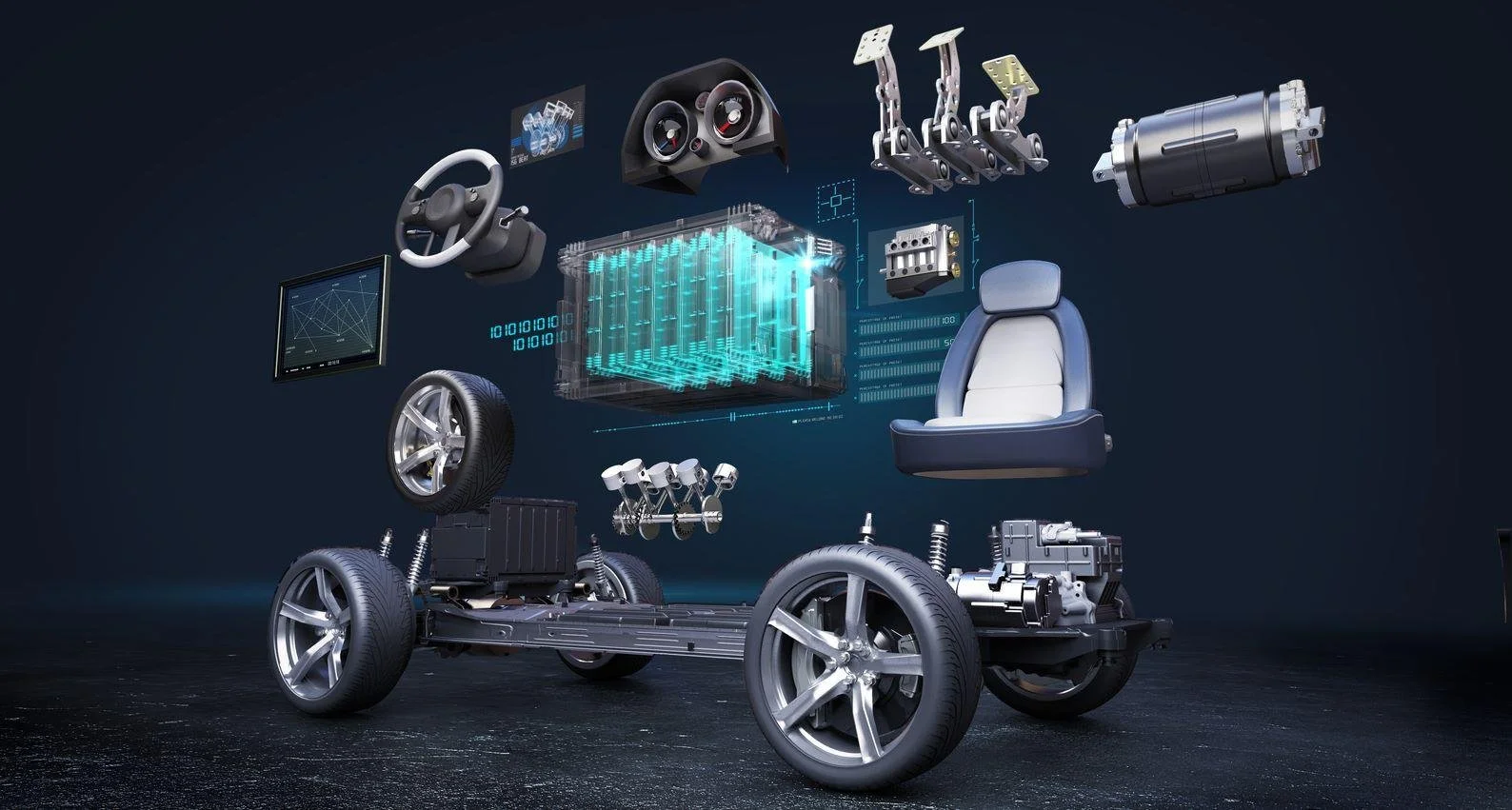
n exploded 3D view of an electric vehicle showing its solid‑state lithium‑metal battery pack. surrounded by separated components including the chassis, motor, suspension, steering wheel, digital dashboard, and control modules, illustrating how the battery integrates into the car’s overall system.
QuantumScape: The Solid-State Contrast
Ticker: QS (NYSE). Price as of June 24, 2026: approximately $7.48. Market cap: approximately $4.56 billion. 52-week range: $4.28 to $19.07. Q1 2026 net loss of approximately $0.16 per share, in line with consensus. Liquidity position of approximately $797 million. Major strategic relationships: PowerCo (Volkswagen Group battery arm) and Honda Motor Company (multi-year research agreement announced June 18, 2026).QuantumScape is fighting an entirely different war. The company develops solid-state lithium-metal batteries for electric vehicles, with a stated energy density target of 800 Wh/L and a 15-minute fast-charge target. The QSE-5 cell has completed A-sample testing with PowerCo and demonstrated more than 1,000 charging cycles while retaining over 95% capacity, performance that would translate into an EV range of approximately 500,000 kilometers with negligible degradation.
The interesting structural fact about QuantumScape in 2026 is not the chemistry, it’s the manufacturing process. Earlier this year, the company integrated its proprietary Cobra solid-state separator process into baseline production. Cobra replaces the previous Raptor process and delivers roughly a 25-fold improvement in productivity. Solid-state batteries have been theoretically possible for two decades, however none have reached commercial scale due to the manufacturing yield on the solid electrolyte separator. Cobra is QuantumScape's bet that they can solve the yield problem at gigawatt-hour scale.
The license with PowerCo grants Volkswagen the right to manufacture up to 40 GWh per year of QuantumScape-platform cells, with an option to expand to 80 GWh. That is roughly enough capacity for one million vehicles annually at full ramp. Honda signed a multi-year research agreement on June 18, 2026, news of which spiked QS shares by 15.8%. [Inference] The Honda relationship appears structured as a research collaboration rather than a near-term manufacturing license, but the strategic signal to other Asian OEMs is significant.
Key dependency: the Cobra process scaling cleanly to gigawatt-hour throughput. If yield falls short, the cost-per-cell math does not close, and the company's $797 million liquidity runway becomes the binding constraint before the first commercial cells ship.
What to watch: 2026 field tests with PowerCo and any disclosed second OEM joint development agreement beyond the Honda research stage. The presence or absence of an Asian-OEM manufacturing license by fourth quarter 2026 will signal whether QuantumScape has the validated multi-customer base required to support its current valuation.
The Post-Lithium Stack: How They Compare: The Honest Tension
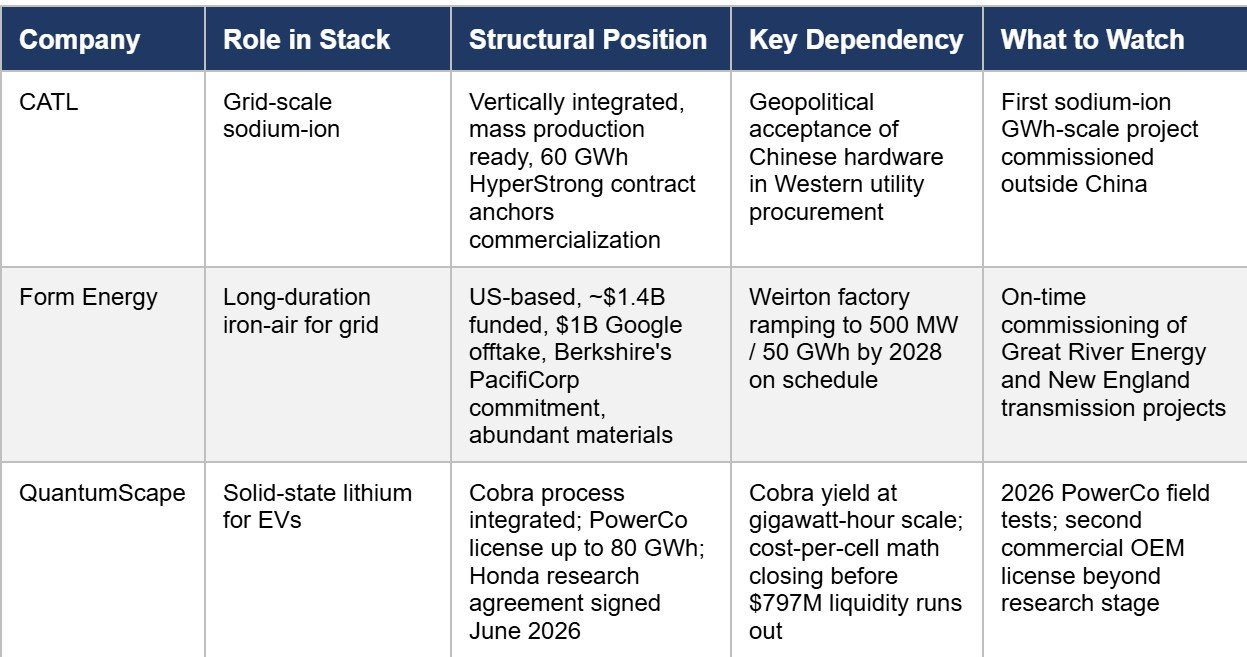
The bifurcation thesis is structurally sound but operationally premature. None of these three companies has actually shipped at scale yet. CATL's 1 GWh end-of-2026 target is the first credible mass-production sodium-ion milestone, and is still only a target. Form Energy's longest-duration commercial deployments are years from commissioning, and the 40% round-trip efficiency is a hard ceiling on any application that requires daily cycling. QuantumScape has not yet delivered its first commercial-scale cell, and the Cobra yield numbers remain undisclosed. The cost gap between sodium-ion and lithium-ion at grid scale will only widen if CATL hits announced manufacturing milestones; if it slips, lithium-ion LFP holds the grid for another cycle. The mobility race is even more brittle: if Cobra yield falls short, solid-state lithium loses to incremental lithium-ion improvements before it ever ships. The bifurcation is real. The timing is not yet validated.
Rabbt Intelligence Note:
A structured Research File on CATL would map the geopolitical exposure of the TENER Sodium product against the September 2026 China delivery milestone and the June 2027 global rollout, and flag the first named European commercial deployment as the Change Trigger most likely to shift this picture. The Relationship Graph would show that CATL and Form Energy, on the surface direct competitors for grid storage, in fact depend on entirely different supply chains, customer geographies, and policy regimes. That makes them structurally complementary rather than head-to-head competitors, a connection most coverage misses entirely. The open question: when the first non-Chinese gigawatt-hour-scale grid storage project commissions in 2027, will it use CATL sodium-ion, Form Energy iron-air, or both?
